Hit enter to search or ESC to close
30 November 2025
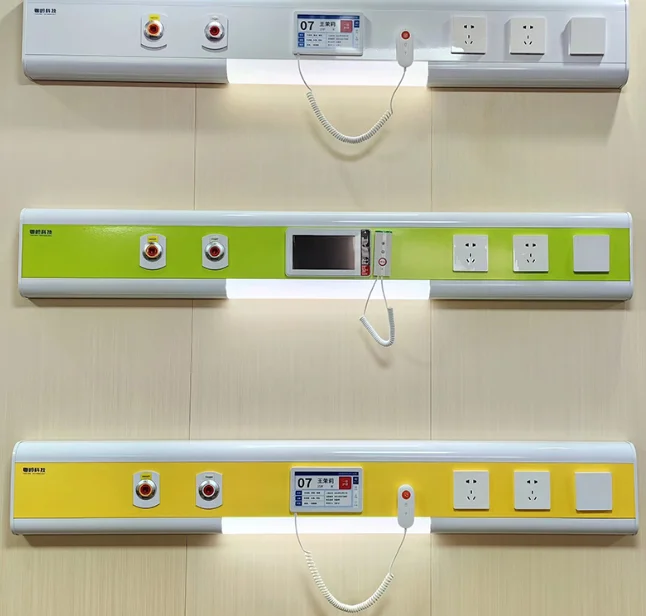
Medical bedhead trunking might sound like niche technical jargon, but it’s actually a cornerstone of modern healthcare facility design worldwide. Essentially, it’s the unsung hero that organizes and manages life-critical utilities—think oxygen lines, power outlets, nurse call systems, and data cables—at the patient bedside. This setup ensures that hospital staff can access everything efficiently, safely, and flexibly, all while maintaining a hygienic environment.
Globally, with the rise of complex hospital needs, aging infrastructures, and growing demand for high-quality patient care, knowing how medical bedhead trunking systems work and their benefits is more than a technical detail—it’s a matter of health service quality and safety. Plus, understanding this helps hospital planners, procurement officers, and even construction engineers to make smarter, sustainable, and cost-effective choices.
Healthcare infrastructure is a massive global industry. According to World Health Organization (WHO) data, over 70% of patient care depends on medical technologies integrated into hospital facilities, including bedhead systems. The World Bank reports healthcare infrastructure investments growing steadily, especially in developing regions where new hospitals are rising rapidly.
However, hospitals face a critical challenge: wiring and utilities become cumbersome if not organized properly. Tangled cables, exposed tubes, and inconsistent power sources can increase risks of infection, equipment failure, or delays in emergency care. Medical bedhead trunking is the answer — designed to neatly enclose essential services right where the patient lies, reducing hazards, improving workflow, and even cutting maintenance costs over time.
Put simply, medical bedhead trunking is a specialized structure mounted above or behind hospital beds that houses critical services in a tidy, accessible manner. Think of it as a modular pipeline or channel that integrates:
Its modular design means it can be customized depending on patient needs and hospital layouts. Most importantly, it supports infection control by enclosing cables and reducing exposed surfaces — a key in modern infection prevention control (IPC) protocols.
This isn’t just about toughness — the materials used must resist daily cleaning chemicals, wear and tear, and potential knocks from equipment or staff movements. Stainless steel, aluminum, and high-grade plastics are popular choices. Durability directly impacts lifespan and maintenance needs.
Hospitals grow, needs change, and technology advances. Modular bedhead trunking allows quick addition or rearrangement of service outlets without major construction. This flexibility is vital for evolving healthcare environments like ICUs or emergency wards.
The trunking must meet standards like ISO 11197:2015 for medical gas pipeline systems, ensuring no cross-contamination risks and electrical safety. Safe cable management reduces trip hazards and accidental disconnections.
Though the upfront cost might seem significant, a well-designed medical bedhead trunking system reduces downtime, maintenance costs, and room renovation frequency. In real terms, this translates to savings both immediately and long-term.
Easy-to-clean surfaces, closed channels, and minimal joints reduce dust and bacterial build-up. Several healthcare protocols now favor trunking systems with antimicrobial coatings or smooth, non-porous finishes.
You’ll find medical bedhead trunking across hospitals in Europe, North America, Asia, and increasingly in Africa and South America as healthcare infrastructure improves. Some interesting applications include:
For example, a hospital in Kenya managing a surge of COVID-19 cases enhanced their bedhead trunking to increase oxygen outlets quickly — a simple retrofit that saved precious patient lives.
Medical bedhead trunking is a universal healthcare solution, applicable from urban mega-hospitals to temporary, quick-build clinics — a silent but crucial enabler.
Everyone talks about ROI these days, but with medical bedhead trunking, the benefits are multifaceted:
Honestly, it instills a quiet trust in hospital environments — staff feel confident, knowing everything is organized and accessible.
| Feature | Specification |
|---|---|
| Material | Anodized aluminum frame + medical grade ABS cover |
| Dimensions | Standard: 2000mm length x 300mm height x 150mm depth |
| Gas outlets | Oxygen, vacuum, Air, Nitrous oxide (configurable) |
| Electrical sockets | Multiple isolated sockets with emergency backup power |
| Data ports | RJ45 Ethernet, USB, nurse call systems integrated |
| Certifications | ISO 11197 compliance, CE Mark, UL certified wiring |
| Vendor | Customization | Lead Time | Warranty | Price Range |
|---|---|---|---|---|
| MediTech Systems | Highly Modular, bespoke layouts | 4–6 weeks | 5 years | $$$ |
| HealthTrunk | Standard modules, limited customization | 2–3 weeks | 3 years | $$ |
| GlobalMed Supplies | Customizable kits, regional aftersales support | 5–7 weeks | 4 years | $$$ |
With digital transformation creeping into every corner of healthcare, medical bedhead trunking is evolving too. Engineers are integrating smart sensors to monitor gas flow, power usage, and faults in real time. Materials innovations like antimicrobial coatings and lightweight composites are reducing infections and improving installation. Also, green energy compatibility—like wiring for solar-powered backup systems—is becoming more common, especially in regions struggling with unreliable grids.
Automation might soon help hospitals reconfigure utility layouts without human intervention, using modular plug-and-play design. That sounds futuristic, but some pilot projects are underway.
Despite all the benefits, medical bedhead trunking can face hurdles:
Experts recommend thorough planning upfront, involving multidisciplinary teams—engineers, clinicians, and procurement—plus choosing vendors familiar with local codes. Innovations in modular designs make installation faster and less disruptive today than a decade ago.
Medical bedhead trunking might not be the flashiest topic in healthcare, but its role is indispensable. By neatly integrating life-critical utilities at patient bedsides, it empowers safer, faster, and more reliable care — translating directly into lives saved and healthcare workers supported. The long-term advantages—from cost savings to infection control—make it a smart investment for any hospital, whether a sprawling urban center or a fast-built relief clinic.
Interested in exploring top-tier medical bedhead trunking solutions or upgrading an existing healthcare facility? Visit medical bedhead trunking for expertly curated products and advice.
Integrating the right bedhead trunking is a blend of art and science — balancing technical specs with human needs. It’s about crafting a safer, adaptable, and patient-friendly space where technology fades into the background but performs flawlessly.
References: