Hit enter to search or ESC to close
3 December 2025
If you’re involved in manufacturing, healthcare, or environmental sciences, you’ve probably heard the term industrial liquid nitrogen generator tossed around. But why exactly does it matter on a global scale? Well, liquid nitrogen is a backbone resource that spans diverse sectors—from cryogenic freezing in food processing to preserving medical samples or enabling high-tech manufacturing. Understanding these generators gives businesses and aid organizations alike more control, independence, and often cost-savings in producing liquid nitrogen on demand.
A quick takeaway: mastering how industrial liquid nitrogen generators fit into the bigger picture helps decision-makers boost efficiency, reduce supply vulnerabilities, and support sustainability efforts worldwide.
The demand for nitrogen in industrial applications is staggering—according to the International Organization for Standardization (ISO), nitrogen gas production is one of the largest segments in industrial gas markets, with estimates reaching millions of tons annually. The United Nations Sustainable Development Goals (SDGs) indirectly touch on this too—by supporting cleaner production technologies and improving healthcare infrastructure, focus on technologies like liquid nitrogen generators gains momentum.
Here’s the challenge though: traditional nitrogen supply chains rely heavily on cryogenic tankers transporting liquid nitrogen over long distances. This isn’t just costly but can be logistically difficult in remote or disaster-stricken areas. An industrial liquid nitrogen generator addresses this by enabling on-site liquid nitrogen production—cutting out middlemen, slashing transportation emissions, and enhancing reliability.
In short, from mega-factories in Asia to isolated clinics in Africa, these generators help close gaps in industrial capabilities and emergency response.
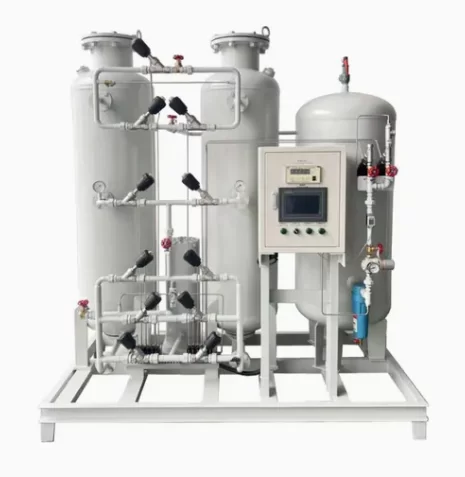
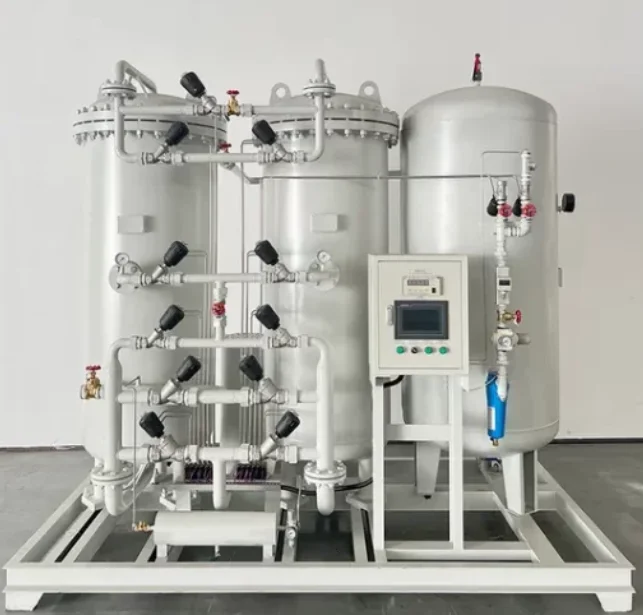
At its simplest, an industrial liquid nitrogen generator is a machine designed to produce liquid nitrogen from atmospheric air by separating nitrogen gas and then cooling it until it liquefies. This process involves air compression, purification, and cryogenic refrigeration technologies. Instead of buying liquid nitrogen delivered in tanks, industries and healthcare facilities can run their own generators to produce nitrogen whenever needed.
This technology underpins critical operations like freezing food for long-term storage, enabling semiconductor manufacturing, and preserving biological samples in vaccine production. It’s also a key player in humanitarian logistics, where supply chains face disruption.
These generators often operate in demanding environments, ranging from harsh industrial plants to disaster zones. The ability to withstand wear-and-tear means reliable nitrogen output during critical windows.
Industrial liquid nitrogen generators come in scalable models—from small units appropriate for clinics to large systems powering factories. Scalable capacity tailoring keeps investments tight and avoids waste.
Liquefying gases takes energy, so modern designs focus on optimizing power use to reduce operational costs and carbon footprint. This intersects with global sustainability goals…
Many applications require ultra-pure nitrogen (over 99.99% purity), such as electronics. The generator’s purification stage is thus crucial to meet specific industrial or medical grade standards.
Intelligent control systems allow these generators to operate with minimal supervision, triggering production as demand arises, and integrating with existing industrial processes.
Beyond initial purchase price, factors like maintenance, power consumption, and longevity determine cost-effectiveness over time—a big deal for budget-conscious enterprises.
Mini takeaway: Those investing in these generators should weigh up these factors carefully to choose models fitting their unique operational footprints.
| Specification | Details |
|---|---|
| Capacity | Up to 2500 liters/day |
| Nitrogen Purity | 99.999% |
| Power Consumption | 50 kW (operational) |
| Dimensions (L×W×H) | 2.5 × 1.5 × 2 meters |
| Automation | Full PLC control with remote monitoring |
| Vendor | Capacity Range (L/day) | Energy Efficiency | Average Price (USD) | Market Focus |
|---|---|---|---|---|
| NitroMax | 500–3000 | High | $120,000–$250,000 | Industrial Manufacturing |
| CryoPure | 250–2000 | Medium | $80,000–$180,000 | Healthcare & Labs |
| GreenNitro Tech | 300–2500 | Very High (Renewable energy powered) | $150,000–$300,000 | Sustainable Industries |
From sprawling industrial facilities in China and the United States to remote scientific outposts in Antarctica, industrial liquid nitrogen generators find diverse applications. Hospitals in Africa rely on onsite nitrogen production to store vaccines safely—often the difference between successful immunization campaigns or spoilage in hot climates. Post-disaster relief teams use portable nitrogen generators to support emergency food preservation and medical sample storage. Oddly enough, even aerospace manufacturing depends heavily on ultra-pure liquid nitrogen for cooling during precision machining.
Seeing the practical side — these systems empower regions with fragile supply chains by turning atmospheric air into a vital resource right where and when it’s needed.
Frankly, these practical benefits add up to tangible social and economic progress in varied contexts.
The future holds promising shifts. Green energy integration is on the rise, with companies exploring solar-powered nitrogen generators to reduce overall environmental impact. Advances in cryogenic materials and heat exchange mechanisms improve energy efficiency noticeably. Digital transformation is leading to AI-driven predictive maintenance and automation, meaning less downtime and smarter resource use. Policies are tightening around emissions—boosting incentives for technologies promising sustainability gains in nitrogen production.
These developments promise that industrial liquid nitrogen generators will become leaner, greener, and smarter in the years to come.
Despite their advantages, these systems face hurdles: upfront investment can be significant, operation demands reliable electricity, and maintenance requires technical expertise. That said, modular designs and remote monitoring tech are lowering barriers. For remote regions, hybrid solutions pairing generators with renewables or backup cylinders help smooth reliability. Training programs and partnerships also address skill shortages.
So, although challenges persist, the industry steadily innovates to make these generators more accessible and effective.
Looking at the big picture, industrial liquid nitrogen generators offer a future-proof solution that aligns with economic prudence, environmental stewardship, and social responsibility. Whether for industrial giants or community healthcare providers, the ability to produce liquid nitrogen locally and efficiently can be transformative. As global supply chains fluctuate and climate imperatives rise, having control over such a critical resource is not just a technical advantage but a strategic one.
Interested in exploring options? Check out our complete range of industrial liquid nitrogen generators to find a model tailored to your needs.
Oddly enough, sometimes the simplest gases can change the world—liquid nitrogen is a perfect example.
References:
1. International Organization for Standardization (ISO)
2. United Nations Sustainable Development Goals
3. Liquid Nitrogen - Wikipedia