Hit enter to search or ESC to close
13 May 2026
Oxygen is a critical utility in healthcare, industrial processing, and emergency response systems. However, the terminology used in oxygen production equipment—especially oxygen generator and oxygen concentrator—often causes confusion. While these terms are sometimes used interchangeably, they are not always identical in engineering scope, capacity, or application. Understanding the distinction is essential for selecting the right system for hospitals, clinics, factories, or field deployment scenarios.
This article provides a structured breakdown of both technologies, their working principles, and real-world use cases to clarify when each system is most appropriate.
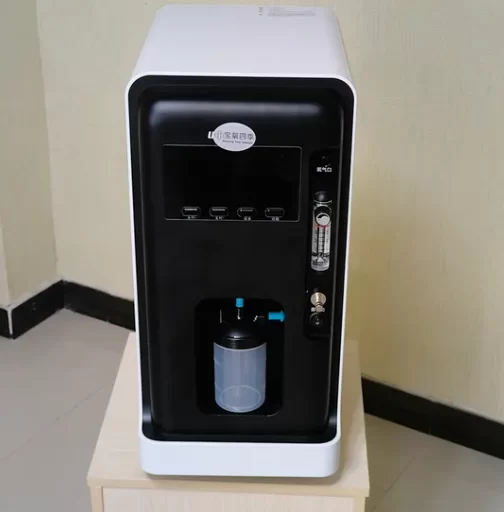
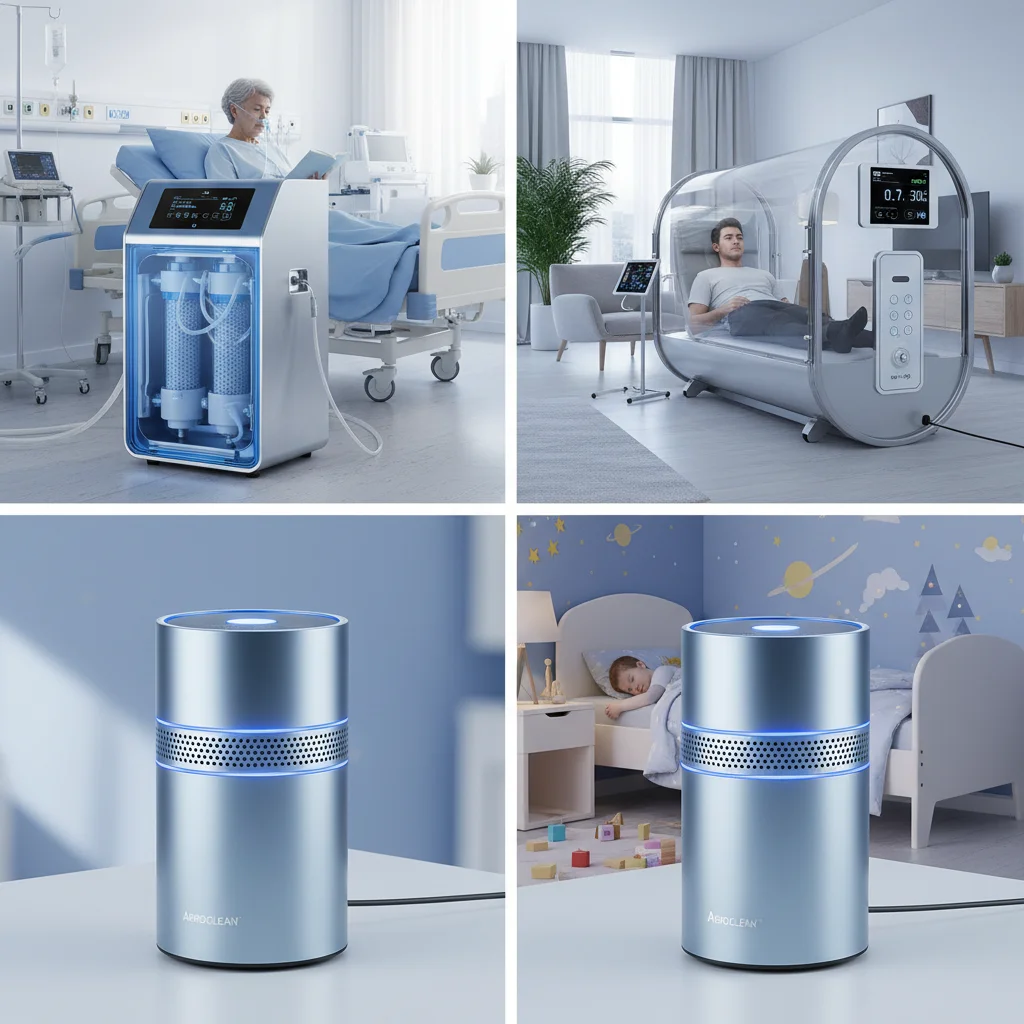
An oxygen concentrator is a device that extracts oxygen from ambient air and delivers it at a higher concentration, typically using Pressure Swing Adsorption (PSA) or similar filtration technologies. It is commonly used in medical environments for patients requiring respiratory support.
Key characteristics:
Small to medium-scale output
Typically used for individual patients or small facilities
Portable or semi-portable design
Oxygen purity usually around 90–95%
Oxygen concentrators are widely found in home healthcare settings and small clinics due to their compact design and ease of use.
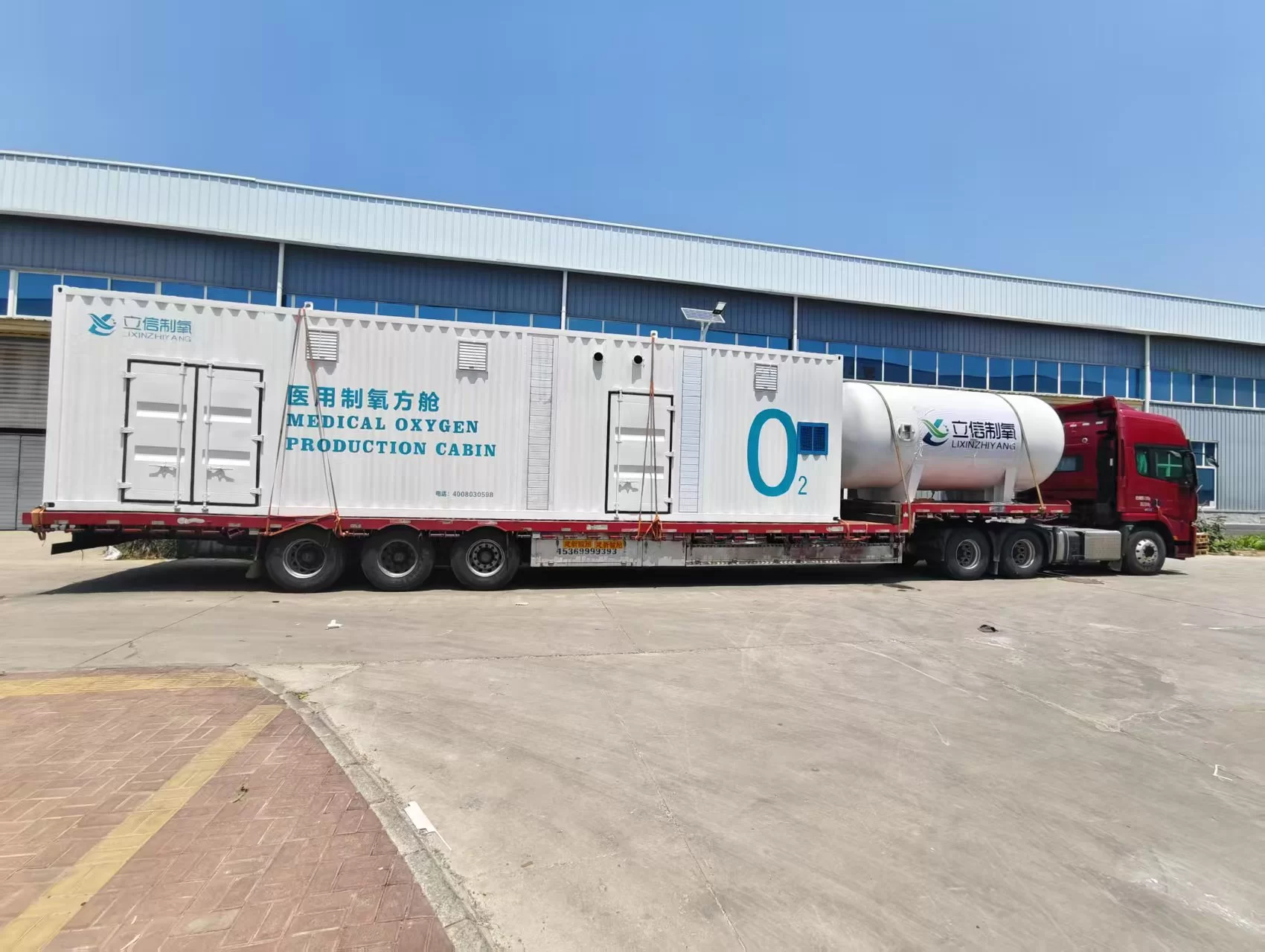
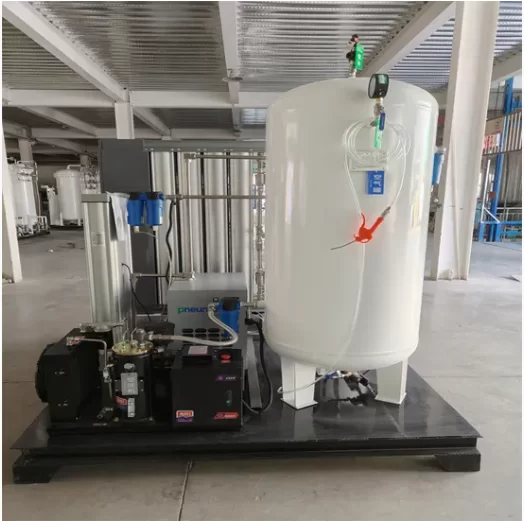
An oxygen generator is a broader category of oxygen production systems designed to produce oxygen on-site for industrial or large-scale medical applications. It often refers to integrated PSA systems, skid-mounted units, or even large modular plants.
Key characteristics:
Large-scale oxygen output
Industrial or hospital-wide supply systems
Fixed installation with pipeline integration
Can achieve continuous, high-volume production
In many modern systems, especially advanced PSA-based setups such as a modular oxygen generator, the term refers to centralized oxygen production infrastructure rather than a portable device.
3. Core Technology: PSA System
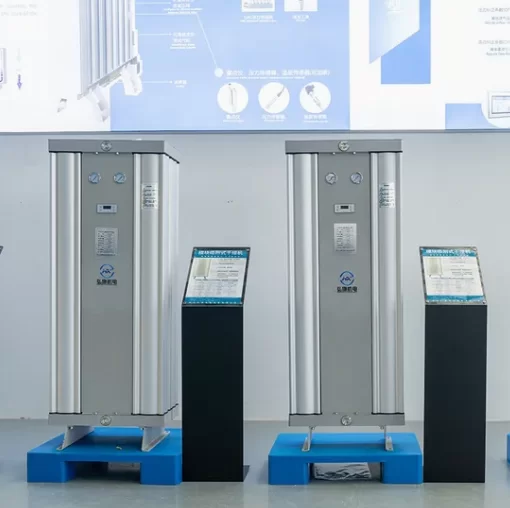
Both oxygen concentrators and oxygen generators commonly rely on Pressure Swing Adsorption (PSA). This technology separates oxygen from nitrogen in the air using molecular sieve materials.
At high pressure, nitrogen is absorbed by zeolite molecular sieves
Oxygen passes through as the product gas
At low pressure, the sieve regenerates for continuous operation
The difference lies not in the chemistry, but in the scale, engineering design, redundancy, and output capacity of the system.
4. Scale and Output Capacity Differences
The most significant distinction between the two systems is capacity.
Low flow rate (typically 1–10 L/min per unit)
Designed for individual oxygen therapy
Not suitable for centralized oxygen distribution systems
High flow rate (tens to thousands of Nm³/h)
Designed for hospitals, manufacturing, metallurgy, and wastewater treatment
Can feed pipeline networks or storage tanks
Large-scale systems such as a modular oxygen plant or china modular oxygen plant fall under oxygen generator infrastructure rather than simple concentrator devices.
5. System Architecture and Engineering Design
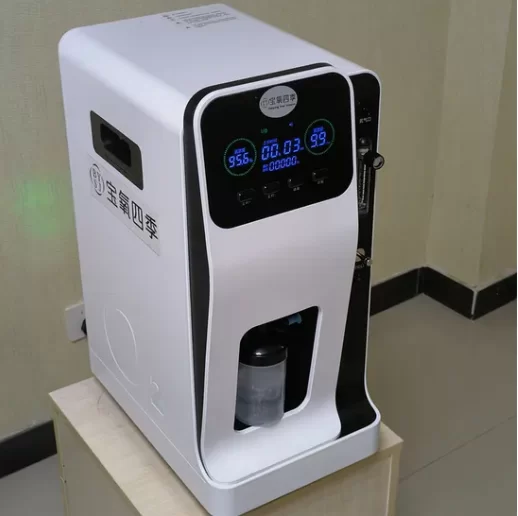
Oxygen concentrators are compact and integrated units. They typically include:
Air compressor
PSA columns
Flow control valves
Oxygen outlet and humidifier
Their design prioritizes portability and ease of maintenance.
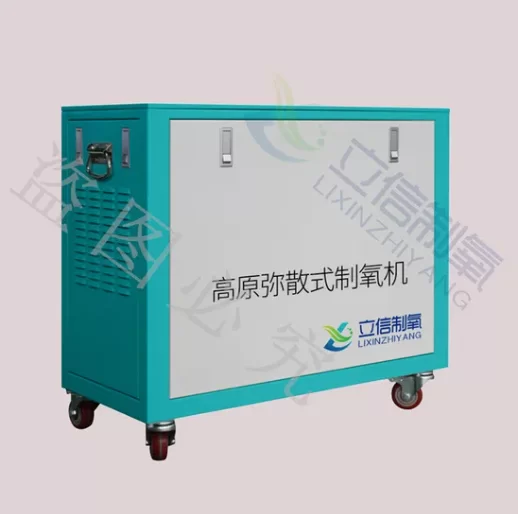
An oxygen generator system is significantly more complex. It may include:
Multiple compressor units
Dual or multi-tower PSA adsorption systems
Buffer tanks and oxygen receivers
PLC-based automation control systems
Redundant safety and monitoring modules
Advanced systems are often configured as modular units, forming scalable infrastructure known as a modular oxygen generator or modular oxygen plant wholesale solution. These systems can be expanded by adding modules based on demand.
6. Application Scenarios
Home healthcare oxygen therapy
Small dental clinics
Emergency backup oxygen supply
Portable medical use
Hospitals with centralized oxygen pipelines
Industrial combustion enhancement
Glass manufacturing
Metal cutting and welding
Aquaculture and wastewater treatment
In large hospitals, centralized oxygen supply systems are typically built using industrial-grade oxygen generators rather than small concentrators.
7. Cost Structure and Long-Term Economics
Lower initial purchase cost
Minimal installation requirements
Higher per-unit oxygen cost at scale
Not economical for large demand scenarios
Higher initial investment
Significantly lower long-term operating cost
Eliminates dependence on cylinder delivery or liquid oxygen logistics
More cost-effective for continuous high-volume usage
For example, China modular oxygen generator wholesale systems are often chosen by hospitals and industrial buyers because they reduce long-term oxygen procurement costs by shifting production on-site.
7. Flexibility and Scalability
One of the major limitations of oxygen concentrators is lack of scalability. Each unit functions independently and cannot easily be expanded into a centralized system.
In contrast, oxygen generators—especially modular designs—offer strong scalability:
Add modules to increase capacity
Integrate with pipeline systems
Expand from hospital ward-level supply to campus-wide infrastructure
This modular approach is the foundation of modern modular oxygen plant systems, where capacity can grow without redesigning the entire installation.
8. Maintenance and Operational Reliability
Simple maintenance
Filter replacement required periodically
Limited redundancy
Require structured maintenance schedules
Often include redundancy systems (N+1 design)
Built for 24/7 continuous operation
Industrial-grade systems often include remote monitoring and PLC automation to ensure stable performance.
9. Regulatory and Purity Standards
Medical-grade oxygen systems must comply with strict purity and safety standards.
Oxygen concentrators: typically 90–95% purity
Oxygen generators: can reach 93–99% depending on configuration and filtration design
High-end PSA-based systems used in hospitals or industrial applications are engineered to maintain stable output under variable load conditions.
10. Final Comparison Summary
| Feature | Oxygen Concentrator | Oxygen Generator |
|---|---|---|
| Scale | Small | Medium to large |
| Usage | Individual patients | Hospitals & industry |
| Output | Low flow | High flow |
| Installation | Plug-and-play | Fixed infrastructure |
| Cost efficiency | Good for small use | Best for large demand |
| Expandability | Limited | High (modular systems) |
Conclusion
The difference between an oxygen concentrator and an oxygen generator is fundamentally about scale, system architecture, and application scope rather than basic working principles. While concentrators are ideal for personal or small clinical use, oxygen generators dominate in industrial and hospital infrastructure due to their scalability and cost efficiency.
For organizations planning long-term oxygen supply independence, modern systems such as a modular oxygen generator or modular oxygen plant provide a future-ready solution that combines reliability, expandability, and reduced operational cost—making them the preferred choice in large-scale oxygen infrastructure planning.