Hit enter to search or ESC to close
28 November 2025
In simple terms, a hospital oxygen supply system is the backbone of modern medical care. It ensures that every patient needing oxygen gets the right amount without interruption. That might sound straightforward, but when you consider global challenges—from pandemic surges to remote health centers—it’s a massive logistical and technological achievement. Oxygen isn’t just a gas; it’s a life-saver powering respirators, surgeries, and critical care. Understanding this system helps us appreciate its role in saving millions of lives worldwide and highlights why investing in it matters deeply.
Mini takeaway: Hospital oxygen supply systems are essential medical lifelines that require robust technology and infrastructure to meet diverse healthcare demands globally.
Let’s zoom out for a moment—oxygen demand in hospitals worldwide has skyrocketed, especially due to respiratory diseases like COVID-19. According to the World Health Organization (WHO), oxygen therapy is required for around 20% of patients suffering from severe COVID-19 symptoms. But here’s the kicker: many healthcare facilities, particularly in low-resource settings, struggle to maintain a steady oxygen supply.[1] The UN estimates that roughly 40% of hospitals in low-income countries lack reliable oxygen delivery systems, contributing to avoidable mortality. Considering hospitals see hundreds to thousands of patients every day, the need for stable oxygen infrastructures becomes glaringly obvious.
Oddly enough, even in high-income countries, sudden surges in demand challenge supply chains—highlighting the fragile, complex nature of these systems. This is why innovations, regulations like ISO standards for medical gases, and investment in resilient oxygen supply systems are crucial. They make the difference between life and death in healthcare emergencies.
Reliable oxygen supply systems are a global health priority, with proven impact on patient outcomes—yet challenges remain across income levels and healthcare settings.
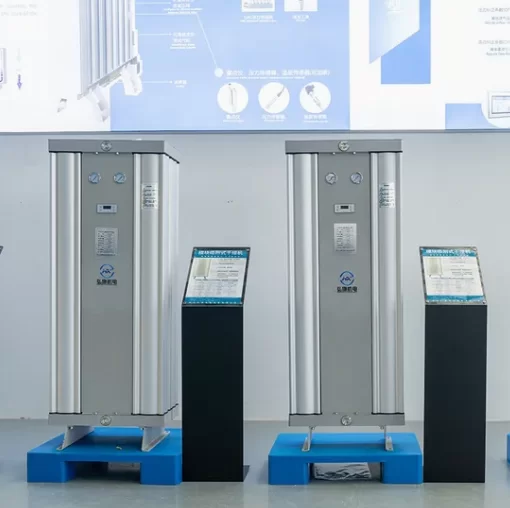
The hospital oxygen supply system is essentially the network and equipment that produces, stores, controls, and delivers medical-grade oxygen from source to patient. This can include:
Its role isn’t just technical; it connects deeply with modern healthcare’s push for safety, efficiency, and quality care. For war zones or disaster relief, it’s a humanitarian marvel providing critical life-saving support, while for normal hospitals, it’s a standard yet indispensable feature.
A hospital oxygen supply system is a complex, integrated setup that pipes life-sustaining oxygen to patients around the clock.
Hospitals cannot afford system failures. Components must resist wear, corrosion, and have long service lives. Engineers design for constant use, knowing downtime means risk.
Some hospitals are small clinics; others are sprawling complexes. The oxygen system has to scale accordingly—whether delivering oxygen to 10 patients or 1000. Modular designs help expansions or temporary surge demands.
Oxygen generation and delivery can be expensive, especially with liquid oxygen tanks and complex pipelines. Cost-effective systems use concentrators or novel delivery tech without compromising quality.
Medical oxygen must follow strict purity and delivery pressure rules (ISO, FDA). Hospitals implement fail-safes, alarms, and maintenance protocols to avoid dangerous leaks or contamination.
Hospitals often have redundant oxygen supplies—cylinders, secondary concentrators, or emergency tanks—to cover power outages or mechanical failures.
| Component | Feature | Typical Value |
|---|---|---|
| Oxygen Purity | Minimum purity level | ≥ 82% (concentrators), ≥ 99.5% (liquid oxygen) |
| Flow Rate | Adjustable delivery | 0.5–60 L/min |
| Pipeline Pressure | Operating pressure | 3.2 bar (approx.) |
| Backup Supply | Emergency oxygen cylinders | Sufficient for 6–12 hours |
Each key factor ensures the system is safe, adaptable, and efficient — tailored for hospitals’ unique demands.
Across continents, these systems serve various populations and contexts:
For example, during the pandemic, healthcare providers in India and Africa ramped up oxygen concentrator installations to handle patient loads. Likewise, NGOs running mobile clinics in conflict zones rely on compact and durable oxygen delivery setups.
The adaptability of oxygen supply systems enables their crucial role in diverse healthcare environments worldwide.
It’s easy to see oxygen as a mere commodity, but the real benefits stretch far:
The hospital oxygen supply system delivers lasting value to healthcare economies, patient experiences, and environmental goals.
The field isn’t static. You’ll see promising developments like:
All point to a future where oxygen supply is cleaner, smarter, and more patient-focused.
Innovation is transforming hospital oxygen supply systems into sustainable, intelligent networks.
Despite advances, there are ongoing hurdles:
Experts suggest a holistic approach combining technology, training, policy change, and emergency planning to build resilient oxygen delivery systems.
Progress relies on addressing infrastructure, cost, and expertise through integrated solutions.
| Vendor | Key Strength | Price Range | Notable Feature |
|---|---|---|---|
| OxyMed Global | Custom scalable systems | $$$ (Premium) | AI-driven pipeline monitoring |
| PureAir Solutions | Affordable concentrators | $ (Budget) | Solar-powered portable units |
| SafeBreath Technologies | High purity liquid oxygen tanks | $$ (Mid-range) | Cryogenic safety innovations |
In wrapping up, the hospital oxygen supply system is more than a medical convenience—it's a vital infrastructure supporting modern healthcare worldwide. Through advances in technology, investment in safety standards, and an eye on sustainability, these systems continue to evolve, saving countless lives daily. If your facility or project needs reliable oxygen supply, exploring the latest systems and trusted suppliers is a smart step.
For more detailed information and expert solutions, I highly recommend visiting hospital oxygen supply system specialists. Their expertise spans design, delivery, and maintenance—exactly what the future of healthcare demands.
Stay curious! Oxygen may be invisible, but its impact is crystal clear.