Hit enter to search or ESC to close
27 October 2025
If you’re shopping for a Wall Air Purifier, you’ve probably noticed the industry is quietly shifting upwards—literally—onto the wall. To be honest, that’s not just a design fad. Wall units keep airflow at breathing height, free up floor space, and, in many offices and clinics, they’re the only way to keep cleaning crews from unplugging the machine. I’ve walked through enough hotels and outpatient corridors to see why this matters.
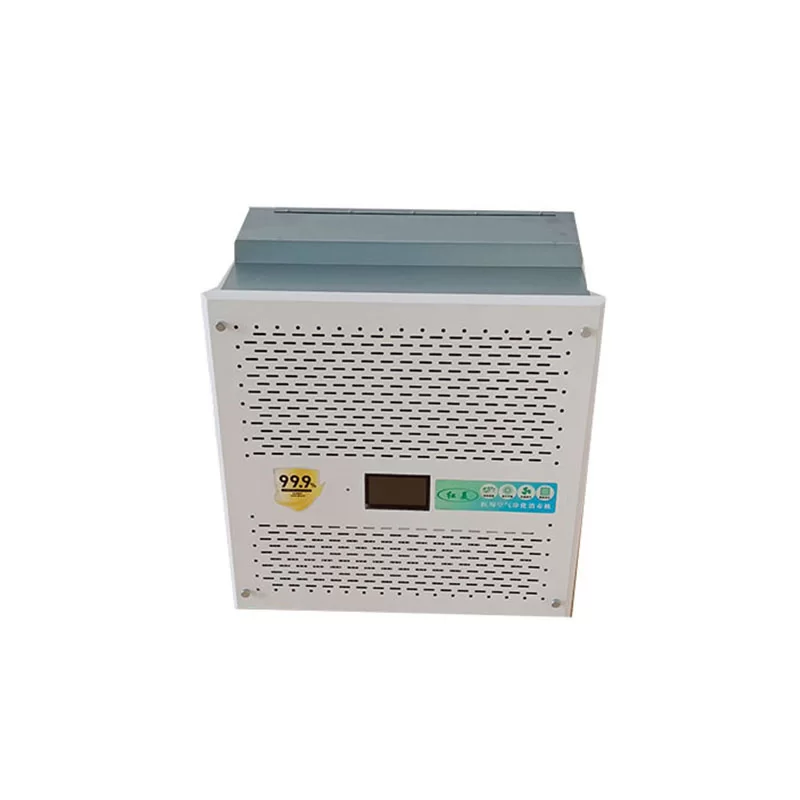
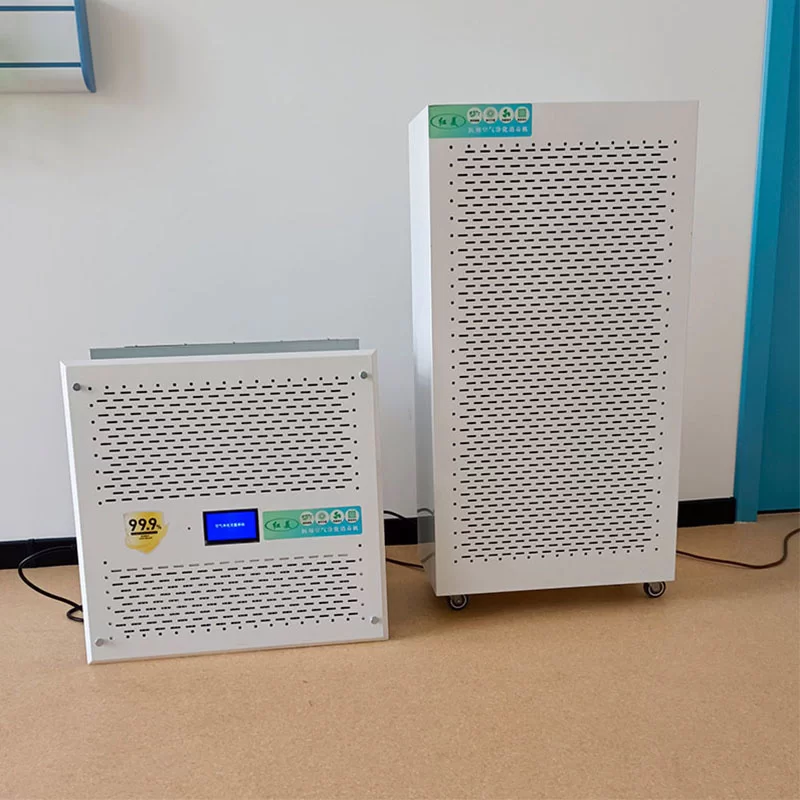
The New Design Medical Wall-Mounted for Office Hotel Air Purifier ships from 888 Kaiyuan Road, Jizhou District, Hengshui City, Hebei Province. It pairs a multi-stage filter stack (pre-filter + HEPA-grade layer + activated carbon) with optional UV-C/photocatalytic modules in some builds. In fact, this layered approach is what most facility managers now request, because bacteria, PM2.5, and odors don’t behave the same way. One size rarely fits all.
| Model | New Design Medical Wall-Mounted for Office Hotel Air Purifier |
| Airflow / CADR | ≈ 380–450 m³/h (PM2.5), tested per GB/T 18801 or AHAM AC-1 |
| Filter system | Pre-filter + HEPA-grade (H13-class target per EN 1822) + activated carbon; optional UV-C |
| Coverage | Around 35–60 m², ceiling height 2.6–3.0 m |
| Noise | ≈ 28–52 dB(A) across fan speeds |
| Power | ≈ 60–90 W |
| Mounting height | 1.2–1.8 m recommended for mixing and access |
| Service life | Pre-filter 2–3 months; HEPA ~9–12 months; Carbon 6–9 months; UV-C 8,000–10,000 h |
Offices, hotels, clinics, and dental waiting areas—basically places with steady foot traffic and scent issues—benefit most. Many customers say the Wall Air Purifier helps with stale corridors and meeting rooms that turn “breathy” after long calls. In hotels, housekeeping likes the wall mount because it doesn’t disappear under luggage or get tipped over. I guess simplicity is an underrated feature.
Materials: flame-retardant housing, high-density pre-filter media, H13-grade HEPA (per EN 1822 targets), pelletized carbon. Methods: ISO 9001 manufacturing, balanced fan calibration, leak scanning for HEPA seals. Testing: CADR per AHAM AC-1/GB-T 18801, efficiency per EN 1822 or ISO 29463, odor reduction via toluene/TVOC surrogates, noise per ISO 3744. Typical lifespan: blower ≥30,000 h with scheduled filter changes.
| Vendor / Model | Mounting | CADR (≈) | Filter grade | Smart | Typical price band |
|---|---|---|---|---|---|
| StoreOxygen New Design (this unit) | Wall | 380–450 m³/h | H13-target + Carbon | PM/TVOC display, timers | Mid |
| Brand A (ceiling cassette) | Ceiling | 450–600 m³/h | H13/H14 options | BMS integration | High |
| Brand B (floor tower) | Floor | 300–400 m³/h | E12–H13 | App + Wi‑Fi | Low–Mid |
OEM branding, colorways to match interiors, filter packs tuned for PM load vs. odor load, child-lock, and IoT gateways for centralized monitoring. For healthcare projects, ask for documentation on filter classification and any UV-C safety interlocks.
• Corporate office (open plan, 50 desks): three Wall Air Purifier units brought average PM2.5 from ≈35 µg/m³ down to ≈8–12 µg/m³ during rush-hour peaks, according to a calibrated handheld monitor (one week log).
• Boutique hotel floor (20 rooms): housekeeping reported odor complaints down by around 42% month-over-month after installation and carbon filter refresh. Anecdotal, yes—but consistent with what we’ve seen elsewhere.
Bottom line: a Wall Air Purifier isn’t just décor—it’s a practical airflow fix that plays nicely with daily operations. This New Design model hits the sweet spot of performance, footprint, and maintenance clarity.
Citations: [1] AHAM; [2] SAC/TC; [3] CEN/ISO; [4] ISO; [5] epa.gov; [6] who.int.