Hit enter to search or ESC to close
10 March 2026
Nitrogen compressors are essential pieces of equipment across a diverse range of industries, from food packaging and pharmaceuticals to oil and gas. These compressors play a vital role in creating and maintaining controlled atmospheres. But how do they actually work? This article will delve into the core principles of nitrogen compressor working, exploring the different types, their applications, and crucial maintenance tips. Understanding these systems is key for optimizing performance and ensuring safety.

At its core, a nitrogen compressor increases the pressure of nitrogen gas. This is achieved by reducing the volume of the gas, forcing more molecules into a smaller space. The process relies on mechanical work applied to the nitrogen gas, increasing its internal energy and, consequently, its pressure. Nitrogen is chosen for its inert properties, making it ideal for applications where oxidation or contamination must be avoided. The compression process generally follows the principles of thermodynamics, specifically involving adiabatic and isothermal compression cycles, depending on the compressor type. The efficiency of the nitrogen compressor directly impacts energy consumption and operational costs.
Key Takeaway: Nitrogen compressors increase pressure by reducing volume, utilizing mechanical work and thermodynamic principles. Inertness makes nitrogen ideal for sensitive applications.
Several types of compressors are employed for nitrogen compression, each with its strengths and weaknesses. The most common include:
The choice of compressor depends on factors like required pressure, flow rate, application, and budget.
Compressor Type Comparison:
• Reciprocating: High pressure, noisy, more maintenance.
• Rotary Screw: Continuous flow, quieter, less maintenance.
• Centrifugal: Large volume, lower pressure.
• Scroll: High efficiency, low noise, smaller applications.
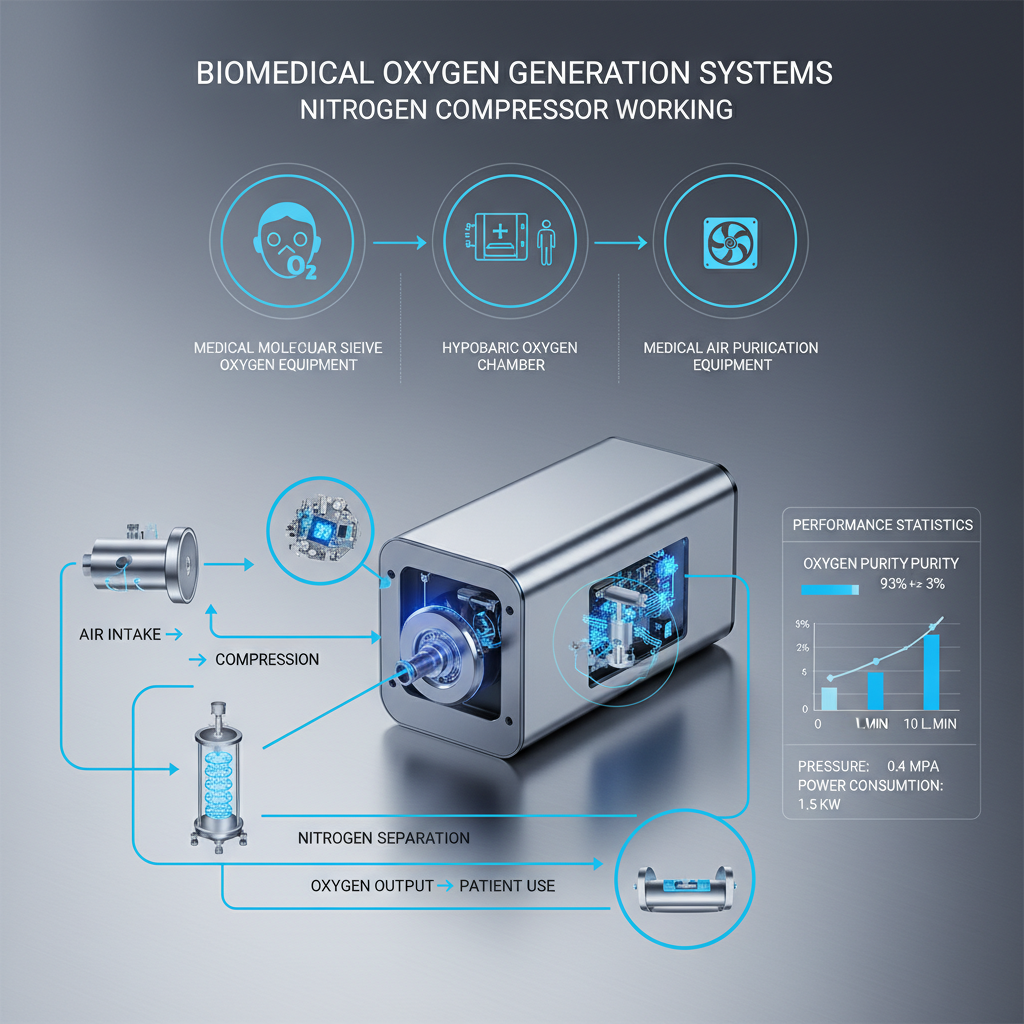
Rotary screw compressors are widely used due to their efficiency and reliability. The core of the compressor consists of two intermeshing helical rotors (screws). As the rotors turn, the volume between them decreases, compressing the nitrogen gas. The gas is drawn in at the inlet, compressed as it moves along the screws, and discharged at a higher pressure. Oil injection is often used for cooling and sealing, further enhancing efficiency. This type of compressor provides a consistent and pulse-free flow of nitrogen, making it suitable for a variety of applications.
Nitrogen compressors are used across many industries. These include:
The versatility of nitrogen makes it an indispensable gas in countless applications.
Regular maintenance is critical for ensuring the longevity and efficient operation of any nitrogen compressor. This includes:
Always follow the manufacturer's guidelines and adhere to strict safety protocols when working with compressed gases. Proper training and the use of personal protective equipment (PPE) are essential.
Understanding the principles of nitrogen compressor working is essential for maximizing performance, ensuring safety, and optimizing operational efficiency. From selecting the right compressor type to implementing a robust maintenance schedule, a proactive approach is key. Store Oxygen offers a wide range of nitrogen compressors and expert support to meet your specific needs.
Nitrogen and compressed air differ significantly in their composition and properties. Compressed air consists primarily of nitrogen (around 78%), but also contains oxygen, argon, and other gases, as well as water vapor. Nitrogen compressors produce nearly pure nitrogen, eliminating oxygen and moisture. This is crucial for applications requiring an inert atmosphere to prevent oxidation, contamination, or fire hazards. Compressed air is generally cheaper to produce but less suitable for sensitive processes. Choosing between the two depends on the specific application requirements.
The frequency of maintenance depends on the compressor type and operating conditions. However, a general guideline is to perform routine checks (oil levels, filter condition, leak detection) monthly, and more comprehensive maintenance (oil changes, filter replacements, valve inspections) every 3-6 months. Always consult the manufacturer's manual for specific recommendations. Keeping a detailed maintenance log is also crucial for tracking performance and identifying potential issues early on.
Safety is paramount when operating a nitrogen compressor. Always wear appropriate personal protective equipment (PPE), including safety glasses and ear protection. Ensure the compressor is properly grounded to prevent electrical hazards. Never attempt to repair or modify the compressor without proper training and authorization. Be aware of the potential for asphyxiation in confined spaces and ensure adequate ventilation. Regularly inspect hoses and connections for leaks.