Hit enter to search or ESC to close
5 December 2025
In an increasingly industrialized and environmentally conscious world, the demand for reliable and on-site nitrogen generation has never been higher. The nitrogen PSA unit stands out as a pivotal technology that addresses this demand with efficiency and sustainability. But what exactly is a nitrogen PSA unit? Why does it matter on a global scale? And how does it shape industries like manufacturing, healthcare, and even humanitarian efforts? Let’s unpack these questions and explore the ins and outs of this technology.
Nitrogen makes up nearly 78% of the Earth's atmosphere, yet industrial-grade nitrogen is not something you just pluck from the air directly—you need specialized equipment. According to the International Organization for Standardization (ISO), the global nitrogen generation market is expanding rapidly, fueled by sectors like food packaging, electronics, pharmaceuticals, and chemical manufacturing. Oddly enough, this growth also supports global sustainability goals, reducing dependence on nitrogen cylinders and the associated carbon footprint of transportation.
Worldwide, industries face the challenge of ensuring a continuous nitrogen supply without complex logistics or exorbitant costs. For example, in regions where reliable supply chains are disrupted by geography or conflict, on-site nitrogen generation ensures stable operation, safety, and environmental compliance. This is where the nitrogen PSA unit comes in as a game changer.
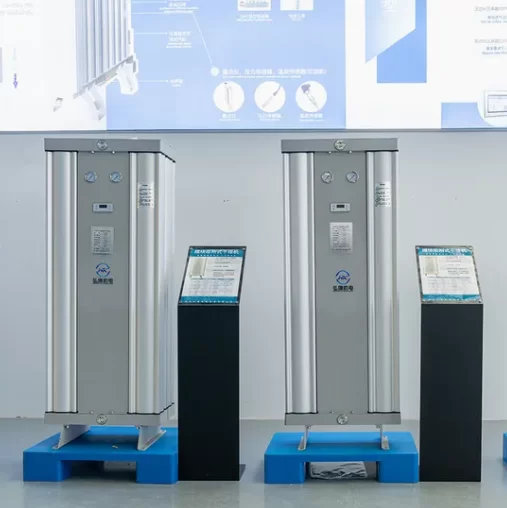
At its core, a nitrogen PSA (Pressure Swing Adsorption) unit is a machine that separates nitrogen from atmospheric air by selectively adsorbing oxygen and other gases using special adsorbent materials under pressure swings. The result? High-purity nitrogen generated on demand, right where you need it.
This technology bridges modern industry’s need for affordable, continuous gas supply with environmental concerns by eliminating the need for bulky cylinders or liquid nitrogen deliveries. Plus, it’s adaptable — from small-scale labs to massive industrial plants.
Nitrogen purity can range from 95% up to 99.999%, depending on the adsorbent materials and system design. Higher purity is crucial in applications like electronics manufacturing or pharmaceutical preservation.
Whether you require a compact unit for a small medical facility or a large-scale setup for food packaging, nitrogen PSA units can be scaled accordingly. This makes them flexible investments for businesses of all sizes.
While PSA units consume electricity to operate valves and compressors, advances in design have significantly improved energy use, supporting green certifications and lower operational costs.
Quality units are built from corrosion-resistant materials with simple valve systems, reducing downtime and maintenance expenses. Routine filter and adsorbent replacement schedules help ensure consistent performance.
Modern nitrogen PSA units come equipped with digital controllers for real-time monitoring, alerts, and remote management—an essential feature in today’s automated industrial environments.
Some PSA units are designed to be portable or skid-mounted for rapid deployment in remote or temporary locations, crucial during emergency or disaster relief operations.
Mini takeaway: Understanding these core factors helps in selecting the right nitrogen PSA unit tailored to your operational needs, balancing purity, scalability, and cost.
The applications of a nitrogen PSA unit stretch across continents and industries. For instance:
For example, in power plants in Southeast Asia or remote oil fields in Africa, on-site nitrogen generators ensure continuous operation without relying on expensive deliveries. Moreover, humanitarian agencies have started leveraging portable nitrogen PSA units to provide key industrial gases in refugee camps or post-natural disaster settings.
Mini takeaway: The nitrogen PSA unit’s versatility is evident in diverse geographical and sector-specific contexts, making it a truly global industrial enabler.
Frankly, switching to a nitrogen PSA system means more than just getting gas on demand; it embodies economic, environmental, and social benefits. Here’s why:
| Feature | Standard Range | Notes |
|---|---|---|
| Nitrogen Purity | 95% – 99.999% | Higher purities for critical applications |
| Flow Rate | 1 – 5000 Nm³/hr | Scalable units from small to industrial scale |
| Operating Pressure | 4 – 12 bar | Depends on application needs |
| Power Consumption | 0.15 – 0.5 kW/Nm³ | Varies with model and capacity |
| Dimensions | Varies | Compact to skid-mounted units |
| Vendor | Purity Range | Automation Level | Energy Efficiency | After-sales Support |
|---|---|---|---|---|
| NitroTech | 95% – 99.999% | Advanced, Cloud Monitoring | High | Global, 24/7 |
| AirPure Systems | 96% – 99.5% | Standard touchscreen controls | Moderate | Regional support centers |
| EcoNitra | 99% – 99.9% | Fully automated, IoT connected | Very High | Sustainability consulting included |
Looking ahead, the nitrogen PSA technology landscape is shifting in exciting ways. For starters, integration with IoT devices allows for predictive maintenance and more efficient operation. Automation and AI-driven control optimize purity and energy use dynamically, saving costs and reducing environmental impact.
Materials science breakthroughs in adsorbents are yielding higher capacity and longer-lasting components, decreasing waste and downtime.
Additionally, the push towards green energy means many nitrogen PSA units are being paired with renewable power sources like solar or wind, making remote installations truly off-grid and sustainable.
No technology is without its challenges. In the PSA nitrogen world, issues like adsorbent degradation, fluctuating ambient temperatures, and initial capital costs can complicate deployment. However, many providers now offer modular design, allowing incremental expansion and easier maintenance. Hybrid systems combining PSA with membrane technologies also help achieve higher efficiencies in diverse operating conditions.
Training and support services are more accessible now than ever, ensuring that operators can maintain optimal performance. Plus, comprehensive warranty and service contracts build trust for long-term investments.
The nitrogen PSA unit is more than a piece of equipment; it’s a strategic asset for modern industries and global sustainability. Its ability to provide reliable, cost-effective, and environmentally friendly nitrogen supply brings practical benefits now—and promises to be a cornerstone technology for the future.
If you’re looking to explore nitrogen generation or upgrade your existing system, I warmly suggest visiting https://www.storeoxygen.com. It’s a good starting point to discover tailored solutions and expert support.
Mini takeaway: In a world demanding efficiency and green credentials, nitrogen PSA units are here to stay, powering industries and hopes alike.
References: