Hit enter to search or ESC to close
Medical Psa Oxygen Generator 50m3/H Oxygen Medical Generator
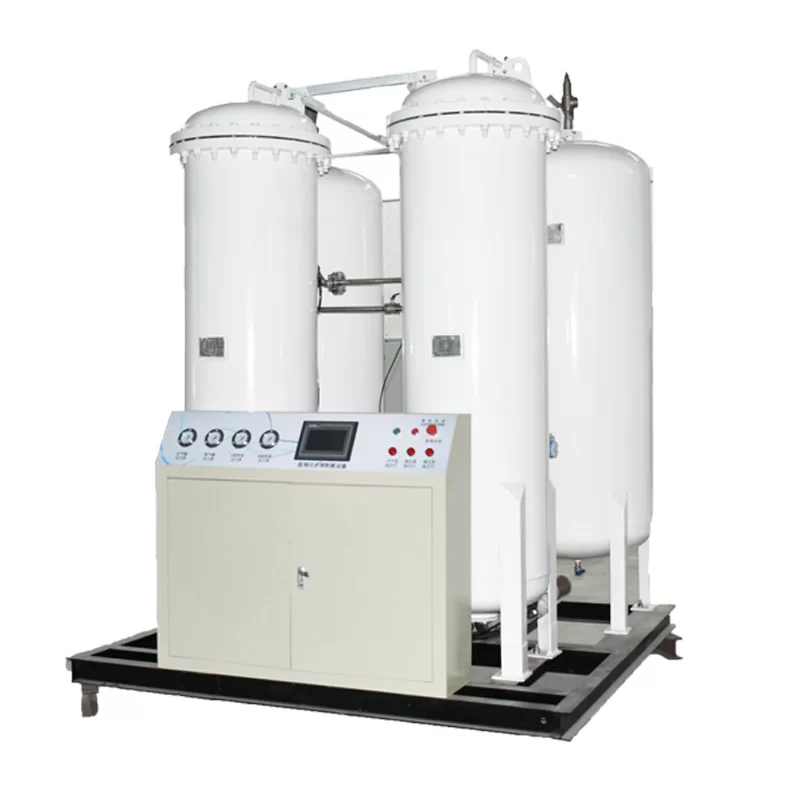
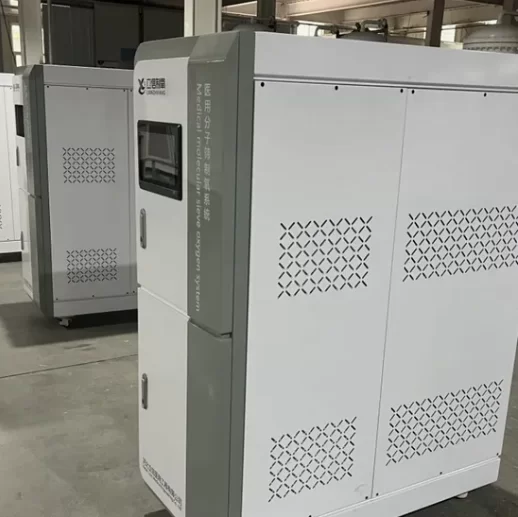
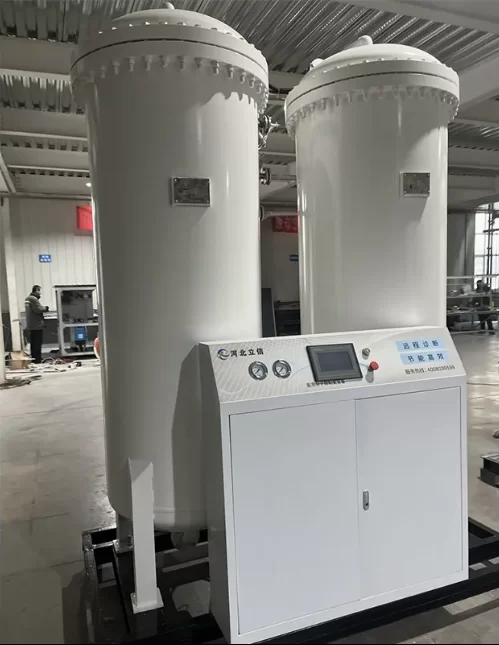
The Medical PSA Oxygen Generator 50m³/h is a reliable and efficient on-site oxygen production system designed to deliver continuous medical-grade oxygen at a flow rate of 50 cubic meters per hour. Ideal for hospitals, clinics, and emergency care facilities, this generator ensures a steady supply of oxygen with purity levels up to 93%, complying with international medical standards.
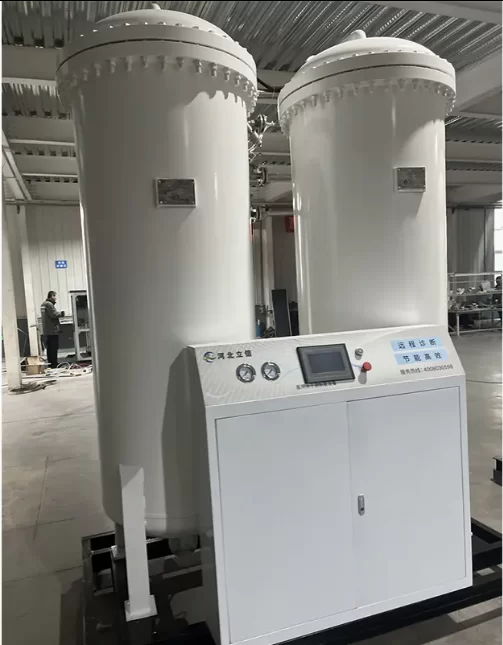
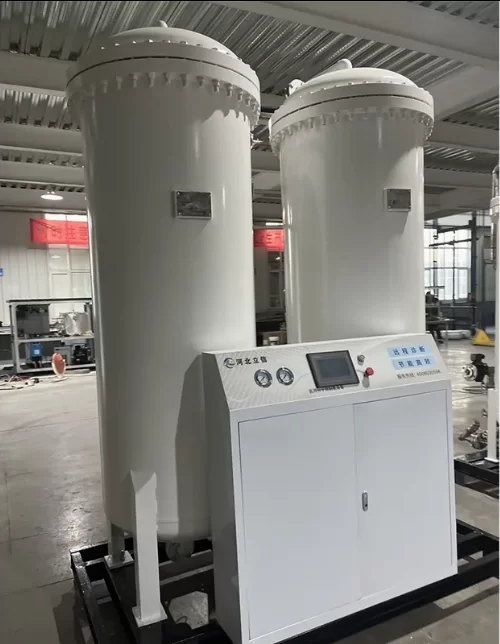
Our Medical PSA Oxygen Generator 50m³/h utilizes advanced Pressure Swing Adsorption (PSA) technology to separate oxygen from compressed air, providing a consistent and high-purity oxygen supply suitable for a variety of medical applications. Designed for healthcare environments where oxygen demand is critical, this generator supports oxygen therapy for patients in hospitals, surgical centers, and emergency units.
The system features a compact footprint with modular components for easy installation and maintenance. It includes integrated compressors, air dryers, molecular sieve beds, and automated control units, ensuring smooth, continuous operation and stable oxygen purity. This on-site oxygen production solution minimizes reliance on bulky and costly oxygen cylinders, enhancing operational efficiency and reducing logistics complexity.
Continuous Medical-Grade Oxygen Supply
Produces oxygen at 50m³/h with purity up to 93%, suitable for critical medical treatments and respiratory support.
Energy Efficient and Cost-Effective
Optimized for low power consumption, this generator significantly reduces operational costs compared to traditional oxygen sourcing methods.
Compact and Modular Design
Facilitates easy installation, expansion, and maintenance, adaptable to varying healthcare facility sizes and oxygen demands.
High Reliability and Durability
Built with premium materials and components to withstand continuous 24/7 operation in demanding clinical environments.
Automated Control System
Equipped with intelligent PLC controls and real-time monitoring to ensure stable oxygen purity, pressure, and flow rates.
Product Details
Customization: | Available |
After-sales Service: | 1 Year |
Warranty: | 1 Year |
Model NO. | Customizable | Certification | ISO9001 |
Noise Level | Low | Voltage | 380V |
Purity | 90-96% | Oxygen Purity | 90~96% |
Noise | 70 (dB) | Operational Principle | Molecular Sieve Pressure Swing |
Drug and Equipment Approval | Ji Xi Zhu Zun 20232080171 | Application | Hospitals, Nursing Homes, Gyms, |
Usage | Oxygen Production | Performance | Energy Saving |
Extraction Gas Status | Oxygen | Transport Package | Wooden Box |
Specification | 1-50 cubic meters | Trademark | Lixin Zhexing |
Origin | Hengshui, Hebei | HS Code | 8419601900 |
Production Capacity | 200 Sets/Year |
Product Introduction
Our company has over 20 years of experience in the production of medical oxygen concentrators, which are divided into high-altitude oxygen concentrators and plain oxygen concentrators. The plateau oxygen concentrator is suitable for low oxygen environments above an altitude of 3000 meters.
Medical molecular sieve oxygen production is a medical molecular sieve oxygen production equipment that uses air as the raw material and molecular sieve as the adsorbent. Through pressure swing adsorption (PSA) method, under normal temperature and low pressure conditions, the adsorption capacity of nitrogen (adsorbate) in the air increases when the molecular sieve is pressurized, while the adsorption capacity of nitrogen in the air decreases when the pressure is reduced, forming a rapid cycle process of pressurized adsorption and depressurized desorption, which separates oxygen and nitrogen in the air. However, carbon dioxide, gaseous acids, and other gaseous oxides in the air are highly polar substances that are difficult to pass through molecular sieves, resulting in an oxygen purity of over 93% ± 3%.
Medical molecular sieve oxygen concentrators are divided into integrated machines and split machines. The all-in-one machine is to assemble all equipment on a base and install it in a pry off manner, while the split machine is to transport the main equipment in a dispersed manner to the site for installation.
The Medical Psa Oxygen Generator 50m3/H Oxygen Medical Generator plays a crucial role in modern hospitals by providing a reliable, continuous supply of high-purity oxygen for various medical applications. In contemporary healthcare environments, oxygen demand is high and fluctuates across departments such as intensive care units (ICUs), emergency rooms, surgical theaters, neonatal care units, and respiratory therapy wards. On-site oxygen generation ensures that medical facilities can maintain uninterrupted oxygen availability without relying on external cylinder deliveries or liquid oxygen supply chains.
One of the primary application scenarios is in intensive care units (ICUs), where critically ill patients often require continuous high-flow oxygen. The 50m³/h capacity of the generator can reliably support multiple ventilators, high-flow nasal cannula devices, and other oxygen therapy equipment simultaneously. The high-purity oxygen produced ensures that respiratory support is both safe and effective, helping patients recover more quickly from conditions such as acute respiratory distress syndrome, pneumonia, and COVID-19-related complications.
In surgical theaters, the generator provides medical-grade oxygen for anesthesia machines and patient monitoring systems. The continuous supply ensures that surgical procedures are never interrupted, which is critical for patient safety during long or emergency operations.
Neonatal and pediatric care is another key scenario. Premature infants and children with respiratory challenges require precise oxygen concentrations to maintain optimal oxygenation. The high-purity output of the generator ensures that these sensitive patients receive safe and controlled oxygen therapy, reducing the risk of complications.
Beyond patient care, the generator is also applied in emergency departments, where sudden surges in oxygen demand occur during accidents, disasters, or outbreaks. On-site generation allows hospitals to respond immediately without waiting for cylinder deliveries, ensuring timely and effective emergency treatment.
Other scenarios include supporting oxygen supply for high-altitude hospital branches, mobile clinics, and temporary medical facilities, where cylinder logistics are challenging. The modular design of the 50m³/h generator allows flexible installation to match hospital size and demand.
Overall, the Medical Psa Oxygen Generator 50m3/H Oxygen Medical Generator has become an indispensable tool in modern hospitals. Its application spans critical care, surgery, emergency response, neonatal support, and temporary or mobile facilities, ensuring a reliable, cost-effective, and safe oxygen supply for diverse clinical needs.
The Medical Psa Oxygen Generator 50m3/H Oxygen Medical Generator is vital for enhancing treatment quality in emergency rooms and intensive care units (ICUs). These departments face high-pressure situations where timely oxygen delivery can determine patient outcomes. Traditional oxygen cylinder supply may not always meet sudden spikes in demand, creating risks during emergencies. On-site PSA oxygen generation addresses this challenge by providing a continuous, high-purity oxygen supply on demand.
In emergency departments, patients often present with acute respiratory failure, trauma, or cardiac arrest, requiring immediate oxygen support. The generator’s 50m³/h capacity ensures multiple oxygen delivery points can operate simultaneously, supporting ventilators, oxygen masks, and high-flow nasal cannulas. Continuous oxygen availability reduces delays in treatment, enabling medical staff to stabilize patients efficiently.
For ICU patients, particularly those on mechanical ventilation or suffering from chronic respiratory illnesses, precise and stable oxygen concentrations are essential. The PSA oxygen generator ensures consistent oxygen purity, typically ranging from 93% to 99%, which minimizes complications associated with hypoxia or oxygen toxicity. The reliability of the generator reduces dependency on cylinder logistics, allowing ICU teams to focus on patient care rather than oxygen management.
The generator also improves emergency preparedness during high-demand periods, such as mass casualty incidents, pandemics, or natural disasters. Hospitals equipped with on-site PSA oxygen systems can handle sudden surges without relying on external suppliers, ensuring uninterrupted care for critical patients.
From an operational perspective, the generator supports efficient workflow management. Staff no longer need to coordinate cylinder replacements or manage storage logistics, which reduces human error and allows healthcare professionals to focus entirely on patient monitoring and treatment.
Safety is another critical factor. Compared with high-pressure cylinders, the PSA system operates under controlled pressures, reducing risks of explosions, leaks, and handling accidents in busy emergency and ICU environments. Integrated digital monitoring systems continuously track oxygen purity, pressure, and flow, providing early alerts for anomalies.
In conclusion, the Medical Psa Oxygen Generator 50m3/H Oxygen Medical Generator improves emergency and ICU treatment by providing reliable, continuous, high-purity oxygen, enhancing patient safety, ensuring operational efficiency, and supporting rapid response in critical situations. It is a cornerstone technology for modern hospital oxygen management.
The Medical Psa Oxygen Generator 50m3/H Oxygen Medical Generator offers significant cost efficiency advantages for hospitals and healthcare facilities. Traditional oxygen supply methods—such as purchasing cylinders or liquid oxygen—incur recurring costs including procurement, transportation, storage, and handling. Over time, these expenses accumulate substantially, especially in facilities with high oxygen demand like ICUs, emergency rooms, and surgical departments. On-site PSA oxygen generation reduces these recurring costs dramatically.
One of the primary cost-saving factors is eliminating cylinder dependence. Hospitals no longer need to rent, transport, or replace cylinders regularly. This not only reduces material costs but also cuts labor costs associated with cylinder handling, refills, and logistics management. The generator produces oxygen on-site using ambient air and electricity, which is more predictable and less subject to market price fluctuations.
Another advantage is reduced waste and storage costs. Oxygen cylinders and liquid oxygen tanks require space, maintenance, and safety measures. PSA generators, especially a 50m³/h system, provide centralized oxygen production that minimizes the need for large storage facilities, reduces potential losses due to leaks or expiration, and enhances overall operational efficiency.
Energy efficiency also contributes to cost-effectiveness. Modern PSA generators are equipped with energy-saving compressors, optimized adsorption cycles, and low-pressure-drop systems, which reduce electricity consumption. Over time, energy-efficient operation offsets the initial investment in the equipment.
From a clinical perspective, improved reliability reduces indirect costs. Uninterrupted oxygen supply prevents treatment delays, reduces patient complications, and improves recovery rates, potentially lowering overall hospital stay costs. For emergency scenarios or ICUs, continuous oxygen availability can prevent costly critical events caused by supply shortages.
Moreover, maintenance and scalability factors enhance long-term efficiency. PSA generators are designed for easy maintenance and modular upgrades. Hospitals can expand capacity as demand grows without investing in entirely new systems, maximizing ROI. Digital monitoring systems further support preventive maintenance, avoiding unexpected breakdowns that could incur emergency repair costs.
In conclusion, the Medical Psa Oxygen Generator 50m3/H Oxygen Medical Generator is a highly cost-efficient solution for modern hospitals. It reduces procurement, transportation, storage, and labor expenses while ensuring stable oxygen supply, energy efficiency, and improved clinical outcomes, making it a strategic investment for healthcare facilities.