Hit enter to search or ESC to close
29 November 2025
When you think about hospital rooms, one of the invisible heroes behind patient care is the over head bed unit. This cleverly designed fixture isn’t just a place to plug in devices; it’s a convergence point that supports caregivers, promotes safety, and enhances patient comfort. Globally, as hospitals and emergency suites strive for efficiency and ergonomic design, understanding the over head bed unit becomes crucial for hospital planners, medical engineers, and even humanitarian aid workers.
In the age of rapidly evolving medical technology and growing patient loads, having an all-in-one system that optimizes space and access to medical utilities is invaluable. Let’s delve into what makes the over head bed unit indispensable worldwide, and how it’s shaping healthcare environments.
The global healthcare sector is under massive pressure. According to the World Health Organization (WHO), close to 60% of inpatient care happens in critical care and surgical units that rely heavily on complex medical equipment. Over head bed units play a subtle but key role here, enabling faster response times and better patient monitoring.
Whether you consider overcrowded hospitals in urban megacities or field clinics responding to crises—such as the UN’s disaster response missions—these units bring together electrical, gas, and data connections in a way that frees up floor space and improves safety. They address a very modern problem: how to keep multiple critical systems accessible, organized, and safe without cluttering already cramped healthcare spaces.
To put it simply: fewer tangles, safer patients, and speedier care. And in a sector where every second and square inch counts, that’s a pretty big deal.
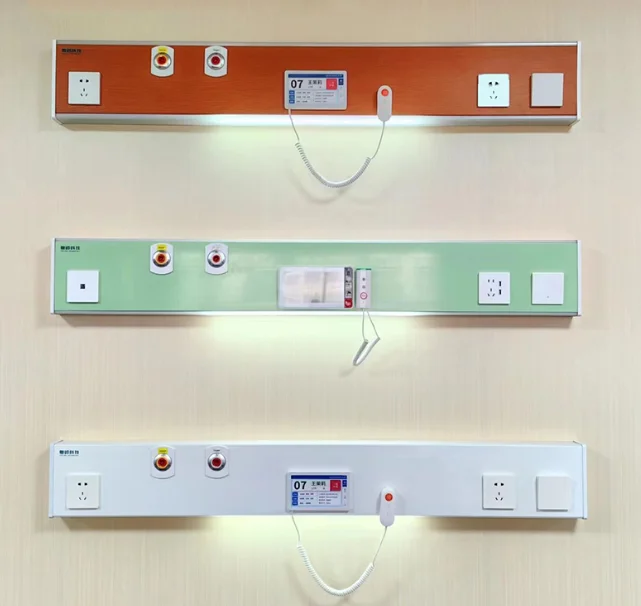
At its core, an over head bed unit is a suspended modular system installed above hospital beds. It typically contains power outlets, gas supply (oxygen, vacuum, etc.), lighting, communication ports, and sometimes monitors—all arrayed so nurses and doctors can access them quickly and conveniently.
Think of it like the “command center” for a single patient space. It eliminates the need for multiple standalone devices scattered across the room, and minimizes cables and tubes crossing the floor—thus reducing trip hazards.
These units have evolved with healthcare needs, now integrating with IT systems and remote patient monitoring. They’re a sort of invisible backbone of any high-functioning ward.
This isn’t just about hardware—getting these right changes how care is delivered every day.
You see over head bed units across continents—from bustling public hospitals in Europe and North America, to makeshift field hospitals responding to disasters in Asia or Africa.
For example, in post-earthquake Nepal, modular over head bed units enabled rapid ICU setups that could provide oxygen and critical monitoring within days rather than weeks. In remote industrial regions in Australia, these units help facilitate telemedicine services, integrating communications and power in rugged environments.
Health ministries in countries with expanding urban populations are increasingly funding the installation of modern over head bed units to cope with rising patient numbers, complying with WHO’s patient safety goals.
| Feature | Specification | Notes |
|---|---|---|
| Dimensions | 2.5m (length) x 0.5m (width) x 0.4m (height) | Standard for adult ICU beds |
| Power Outlets | 6–10 grounded sockets, IEC 60320 | Supports multiple devices like monitors, pumps |
| Medical Gases | Oxygen, Vacuum, Air (ISO 7396-1 compliant) | Flexible manifold options |
| Lighting | LED adjustable exam & ambient lighting | Energy-efficient, low heat output |
| Material | Powder-coated aluminum frame with antimicrobial coating | Durability + infection control |
| Brand | Customization | Warranty | Price Range | Lead Time |
|---|---|---|---|---|
| MediTech Systems | Highly customizable; modular add-ons | 5 years | $$$ | 6-8 weeks |
| HealthLine Corp. | Standard units; limited custom modules | 3 years | $$ | 4-6 weeks |
| GlobalMed Designs | Fully bespoke designs on request | 7 years | $$$$ | 8-12 weeks |
Integrating an over head bed unit brings many tangible benefits:
On an emotional level, it’s about trust—patients can see that the setup is designed for their safety and well-being, which improves their overall experience.
The future is exciting. You’ll find smart integration with hospital information systems making these units “intelligent.”
We’re almost looking at these units becoming miniature healthcare hubs themselves—as opposed to simple utility carriers.
Adoption isn’t always straightforward. Challenges include:
Experts recommend early planning, modular phased installation, and partnering with vendors who offer tailored solutions. Increasingly, governments and NGOs offer subsidies or financing for such upgrades, recognizing their long-term impact.
In real terms, over head bed units transform healthcare spaces by merging technology, safety, and comfort into one practical fixture. Whether you’re upgrading a hospital, setting up a field clinic, or working on a telehealth-enabled ward, these systems provide long-term benefits that outweigh initial investments.
If you’re curious to explore what might fit your needs, do check out the offerings at our partner site—where you’ll find tailored solutions ready to modernize any patient space.
Hospitals aren’t just buildings; they’re environments where life-saving decisions happen every moment. Over head bed units quietly make that environment smoother and safer. It’s a small change with big impact.