Hit enter to search or ESC to close
Plant FCC Machine Psa Oxygen Certification Oxygen Generator
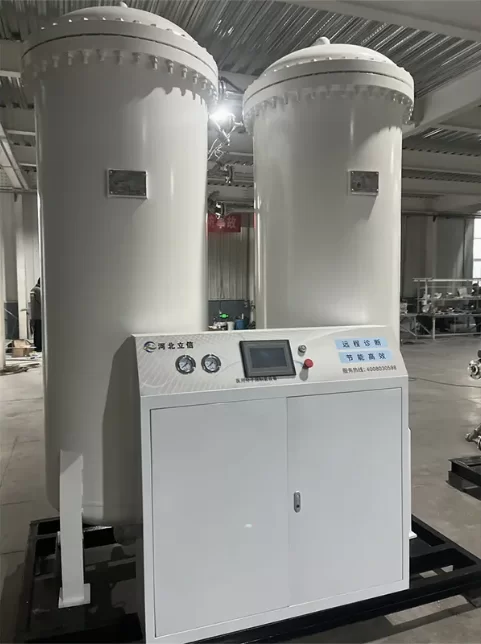
The Plant FCC Machine PSA Oxygen Generator is a certified, high-efficiency oxygen production system designed for industrial applications requiring reliable and continuous oxygen supply. Utilizing advanced Pressure Swing Adsorption (PSA) technology, this generator ensures consistent oxygen purity and operational stability, making it ideal for fluid catalytic cracking (FCC) processes and other industrial oxygen demands.
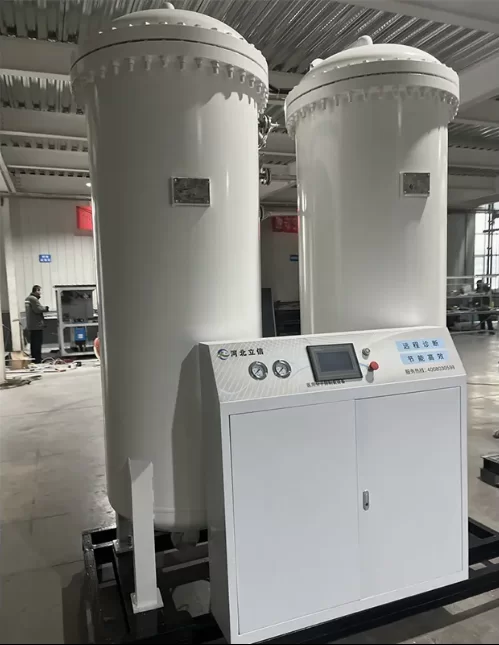
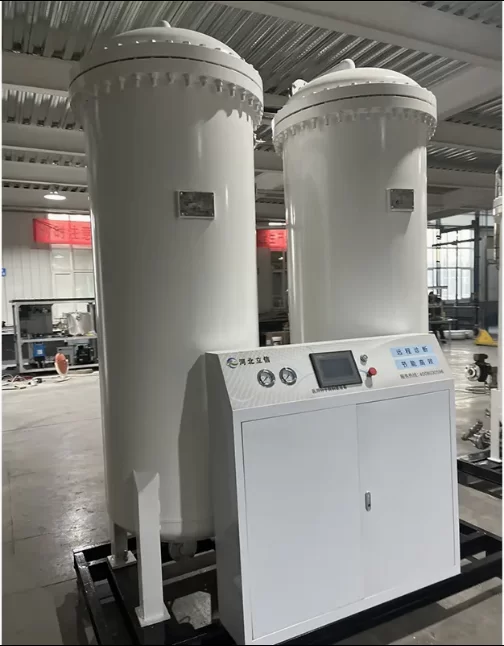
The Plant FCC Machine PSA Oxygen Generator is engineered to meet the rigorous oxygen requirements of petrochemical plants, especially for fluid catalytic cracking (FCC) units. This system employs cutting-edge PSA technology to separate oxygen from compressed air, delivering high-purity oxygen with levels typically reaching up to 93% or higher.
Designed for continuous operation in harsh industrial environments, the generator is built with robust materials and advanced control systems to provide steady oxygen output essential for FCC reactors and related processes. Certified according to international standards, this oxygen generator supports plant safety, efficiency, and environmental compliance.
With a modular design, the system offers scalability and easy integration into existing plant infrastructures. It minimizes reliance on external oxygen supplies, reducing operational costs and logistics complexity. This makes it a strategic asset for petrochemical facilities aiming to enhance production efficiency and sustainability.
Product Details
Customization: | Available |
After-sales Service: | 1 Year |
Warranty: | 1 Year |
Model NO. | Customizable | Certification | ISO9001 | |||
Noise Level | Low | Voltage | 380V | |||
Purity | 90-96% | Oxygen Purity | 90~96% | |||
Noise | 70 (dB) | Operational Principle | Molecular Sieve Pressure Swing | |||
Drug and Equipment Approval | Ji Xi Zhu Zun 20232080171 | Application | Hospitals, Nursing Homes, Gyms, | |||
Usage | Oxygen Production | Performance | Energy Saving | |||
Extraction Gas Status | Oxygen | Transport Package | Wooden Box | |||
Specification | 1-50 cubic meters | Trademark | Lixin Zhexing | |||
Origin | Hengshui, Hebei | HS Code | 8419601900 | |||
Production Capacity | 200 Sets/Year | |||||
Product Introduction
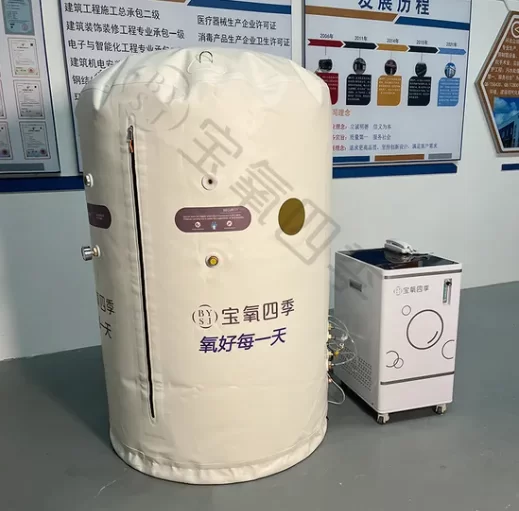
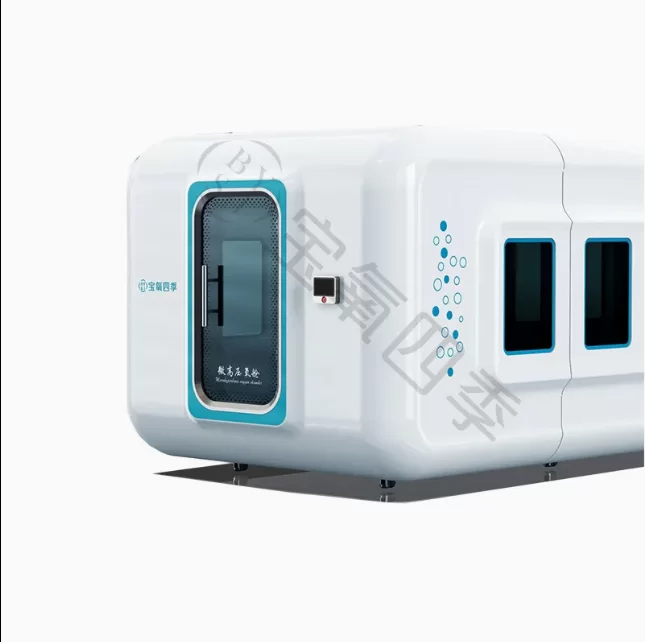
Our company has over 20 years of experience in the production of medical oxygen concentrators, which are divided into high-altitude oxygen concentrators and plain oxygen concentrators. The plateau oxygen concentrator is suitable for low oxygen environments above an altitude of 3000 meters.
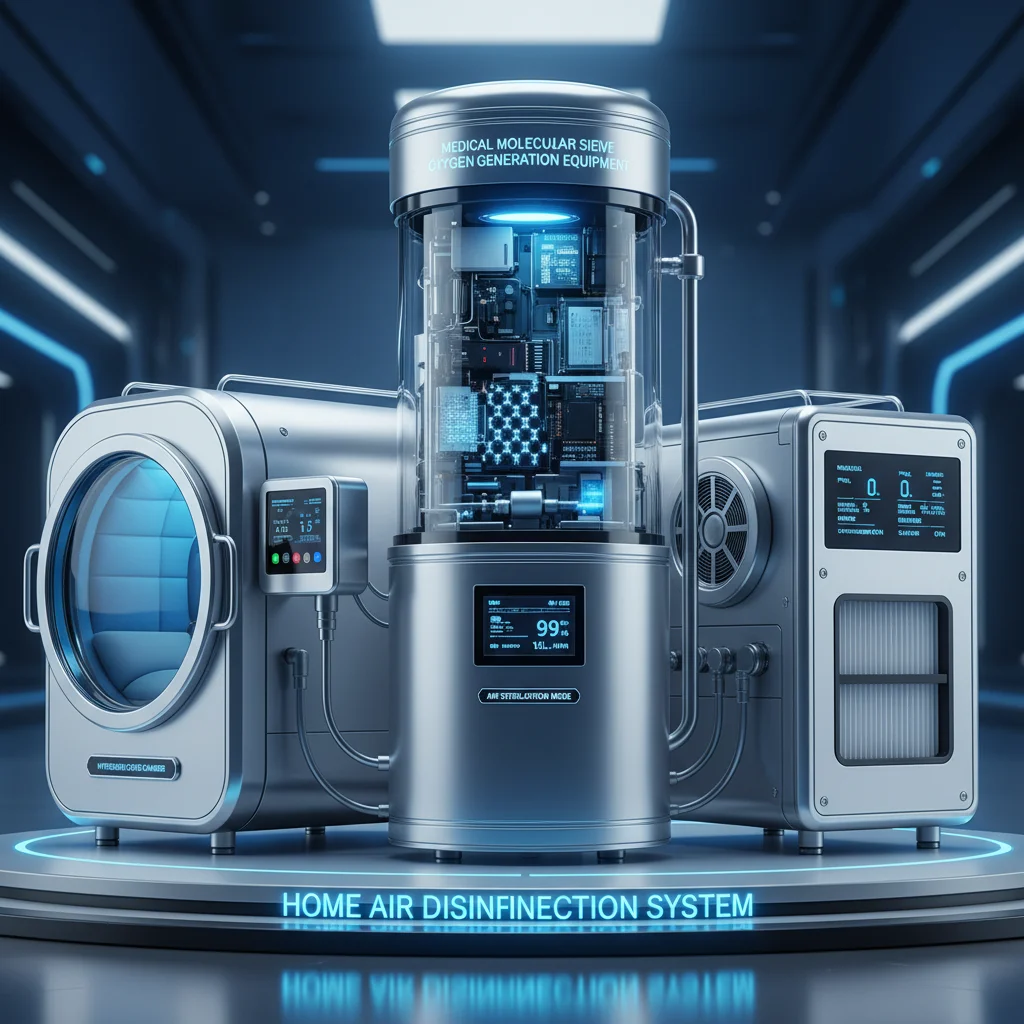
Medical molecular sieve oxygen production is a medical molecular sieve oxygen production equipment that uses air as the raw material and molecular sieve as the adsorbent. Through pressure swing adsorption (PSA) method, under normal temperature and low pressure conditions, the adsorption capacity of nitrogen (adsorbate) in the air increases when the molecular sieve is pressurized, while the adsorption capacity of nitrogen in the air decreases when the pressure is reduced, forming a rapid cycle process of pressurized adsorption and depressurized desorption, which separates oxygen and nitrogen in the air. However, carbon dioxide, gaseous acids, and other gaseous oxides in the air are highly polar substances that are difficult to pass through molecular sieves, resulting in an oxygen purity of over 93% ± 3%.
Medical molecular sieve oxygen concentrators are divided into integrated machines and split machines. The all-in-one machine is to assemble all equipment on a base and install it in a pry off manner, while the split machine is to transport the main equipment in a dispersed manner to the site for installation.
A modern Plant FCC Machine Psa Oxygen Certification Oxygen Generator integrates multiple advanced technologies to ensure efficient, continuous, and high-purity oxygen production for industrial and medical applications. At the core of the system lies the PSA (Pressure Swing Adsorption) technology, which utilizes molecular sieves—most commonly zeolite-based adsorbents—to selectively capture nitrogen from compressed air while allowing oxygen to pass through. This separation mechanism enables the system to produce oxygen with concentration levels typically ranging from 93% to 99%, depending on the configuration and application standards.
One of the key technological components is the FCC (Fluid Catalytic Cracking) plant-grade machinery integrated into the oxygen generation process. While traditional FCC units are used in petrochemical environments for breaking down hydrocarbons, in this context, the term highlights the robust engineering and refinery-level reliability standards of the compressed air treatment side. High-quality air compressors, precision filtration systems, and activated carbon filters ensure the feed air is dry and oil-free before entering the PSA towers, significantly improving oxygen purity and machine longevity.
Another essential technology is the dual-tower adsorption structure. PSA systems operate by cycling between adsorption and desorption stages. During adsorption, nitrogen is captured by the zeolite bed, while during desorption, the bed regenerates by depressurizing and releasing the captured nitrogen back into the atmosphere. Advanced PLC-based timing modules optimize switching intervals, pressure levels, and drying cycles, resulting in stable output pressure and consistent purity.
On the certification side, the Plant FCC Machine Psa Oxygen Certification Oxygen Generator adheres to multiple international standards including ISO, CE, and in certain medical configurations, certifications related to oxygen safety and purity validation. Oxygen sensors and inline purity analyzers continuously monitor concentration levels to ensure compliance. Smart monitoring systems allow remote supervision, data logging, alarm notifications, and predictive maintenance scheduling.
In addition, modern oxygen generators feature heat management and energy-saving technologies. Variable frequency drives (VFD), optimized adsorption cycles, and low-pressure drops reduce power consumption, which is critical for industries where operational cost control is a priority. Modular system design also allows scalability, enabling facilities to upgrade capacity based on consumption needs without replacing the entire system.
Overall, the key technologies behind Plant FCC Machine Psa Oxygen Certification Oxygen Generator Systems include PSA adsorption science, high-grade compressed air pretreatment, industrial certification standards, molecular sieve filtration, digital monitoring, and modular engineering. These technologies collectively enable reliable, safe, and cost-effective oxygen supply for industrial plants, healthcare facilities, and specialized engineering environments.
Global industrial and medical facilities increasingly choose the Plant FCC Machine Psa Oxygen Certification Oxygen Generator because it offers a reliable and efficient solution for continuous oxygen supply. Traditional oxygen sourcing methods, such as cylinder procurement or liquid oxygen deliveries, involve logistical challenges, high operating expenses, and dependency on external suppliers. With on-site production via PSA oxygen generators, facilities decentralize their oxygen infrastructure and gain long-term operational independence.
One of the primary reasons for adoption is uninterrupted oxygen availability. PSA-based systems produce oxygen continuously, ensuring that facilities with high consumption demands—such as petrochemical plants, metallurgy industries, aquaculture sites, and medical institutions—have reliable oxygen flow without concerns of shortage. This continuous supply capability becomes especially important in high-risk environments or emergencies where oxygen plays a critical operational role.
Cost efficiency is another major factor. Cylinders and liquid oxygen deliveries require recurring rental charges, transportation fees, storage permits, and handling manpower. A Plant FCC Machine Psa Oxygen Certification Oxygen Generator eliminates these expenses by generating oxygen on-site using ambient air and electricity. Over time, the return on investment (ROI) becomes significant, particularly for high-volume users.
Certification plays a key role in global adoption as well. These generators comply with international engineering and oxygen purity standards, making them suitable for both industrial and medical oxygen workflows depending on configuration. Oxygen purity typically reaches 93–99%, meeting specifications for welding, combustion enhancement, ozone generation, pharmaceutical processing, aquaculture aeration, and more.
Global facilities also value the high safety profile of on-site PSA systems. Unlike high-pressure cylinders or cryogenic storage tanks, PSA generators operate at controlled pressures and do not involve flammable storage hazards. This reduces accident risks and simplifies safety compliance. Additionally, digital monitoring systems equipped with oxygen analyzers, alarms, and PLC control units enhance operational transparency and predictive maintenance.
Sustainability is another adoption driver. On-site oxygen generation reduces carbon emissions associated with oxygen transport logistics. For companies operating under ESG or green compliance frameworks, PSA oxygen systems support long-term environmental objectives.
Finally, modular scalability allows multinational facilities to standardize oxygen infrastructure across multiple sites. A PSA system can be expanded by adding additional modules as demand increases, making it suitable for both small clinics and large industrial plants.
In summary, global facilities choose the Plant FCC Machine Psa Oxygen Certification Oxygen Generator for continuous supply due to reliability, cost efficiency, certification compliance, safety, scalability, and sustainability—all of which contribute to long-term operational stability.
The Plant FCC Machine Psa Oxygen Certification Oxygen Generator is poised for significant advancements as global demand for high-purity oxygen continues to expand across industries ranging from healthcare and petrochemicals to metallurgy, aquaculture, pharmaceuticals, and environmental engineering. Future development trends focus on efficiency, automation, sustainability, hybrid technology integration, and international compliance.
One major trend is the enhancement of PSA adsorption efficiency through improved molecular sieve materials. Next-generation zeolites and adsorbent composites are being engineered to achieve higher nitrogen adsorption capacity, faster desorption cycles, lower pressure drop, and longer service life. Such materials will enable oxygen generators to produce higher purity levels while reducing energy consumption—an important factor for large-scale industrial operations.
Automation and intelligent control will also drive future adoption. AI-driven monitoring platforms, cloud-based diagnostic systems, and smart PLC control units are enabling real-time oxygen purity tracking, predictive maintenance, and system optimization based on usage patterns. Automated calibration and fault prediction will minimize downtime and support remote management of multi-facility oxygen infrastructures.
Hybrid oxygen production models represent another emerging trend. Combining PSA with VPSA, cryogenic, or membrane separation systems allows facilities to tailor oxygen purity and volume to specific applications. For example, industrial users may integrate PSA for base-level oxygen supply and cryogenic units for peak purity demands, resulting in more flexible and sustainable oxygen engineering solutions.
Sustainability and decarbonization will influence future standards as industries seek to reduce emissions associated with oxygen transport logistics. On-site PSA generation inherently supports decarbonization, and future systems are expected to feature more energy-efficient compressors, heat recovery modules, and low-power adsorption cycles.
Certification and global compliance frameworks will also expand. As more regions adopt strict medical gas regulations, oxygen generators will increasingly need to meet ISO, CE, FDA, GMP, and industrial-grade certification standards depending on use cases. Compliance expansion improves international interoperability and boosts market penetration.
Manufacturing modularization is another trend shaping equipment evolution. Modular PSA units allow customization, faster installation, easier scalability, and simplified maintenance. This supports facilities ranging from small clinics in developing regions to large industrial complexes in advanced economies.
Finally, application diversification will accelerate adoption. Beyond traditional petrochemical plants and hospitals, the Plant FCC Machine Psa Oxygen Certification Oxygen Generator will see broader use in semiconductor manufacturing, wastewater treatment, hydrogen production integration, food preservation, and aquaculture aeration.
In conclusion, future development trends of the Plant FCC Machine Psa Oxygen Certification Oxygen Generator in oxygen engineering are driven by technological innovation, automation, sustainability goals, hybrid system integration, global certification standards, and expanded application scenarios. These trends will reshape how industries produce, manage, and utilize oxygen over the coming decades.