In the rapidly evolving landscape of medical grade air purification, the emergence of the battery operated air filter has revolutionized how healthcare providers and home-care patients manage air quality in non-traditional settings. By decoupling high-efficiency filtration from a constant wall-socket power source, these devices ensure that critical air purity is maintained during patient transport, power outages, or in remote clinical environments where electrical infrastructure is unreliable.
The global demand for mobile air purification is driven by an increasing prevalence of respiratory conditions and the necessity for sterile environments in outpatient care. A battery operated air filter provides a vital safety net, utilizing advanced HEPA and carbon filtration systems to eliminate airborne pathogens and volatile organic compounds without compromising the mobility of the medical equipment. This flexibility is essential for maintaining the integrity of clean zones in dynamic medical environments.
Understanding the technical synergy between high-capacity battery cells and low-energy consumption filtration motors is key to maximizing the utility of these devices. Whether integrated into a portable oxygen concentrator or used as a standalone unit for localized sterilization, the battery operated air filter represents a critical leap toward patient-centric design, prioritizing safety, autonomy, and immediate response in emergency medical scenarios.

The Technical Fundamentals of Battery Operated Air Filters
At its core, a battery operated air filter operates by utilizing a brushless DC motor powered by high-density lithium-ion or lithium-polymer cells. These motors are specifically engineered for low energy draw while maintaining high static pressure, which is necessary to push air through dense HEPA (High-Efficiency Particulate Air) media. The integration of a smart battery management system (BMS) ensures that the voltage remains stable, preventing fluctuations that could lead to inconsistent airflow or premature filter clogging.
The design philosophy focuses on the "clean air delivery rate" (CADR) relative to power consumption. By optimizing the aerodynamic path from the intake to the exhaust, these devices can operate for extended periods on a single charge. This makes them indispensable for patients using portable oxygen concentrators or for medical staff moving sensitive equipment between wards, ensuring that the surrounding air remains free of contaminants regardless of the location.
Global Relevance and Healthcare Standards
From a global perspective, the necessity for a battery operated air filter has been highlighted by the World Health Organization's (WHO) guidelines on infection prevention and control. In many developing regions, the lack of stable electrical grids makes traditional plug-in air purifiers impractical. Battery-powered solutions bridge this gap, providing a standardized level of air purity in field hospitals and rural clinics, thereby reducing the incidence of hospital-acquired infections (HAIs).
Industry standards, such as ISO 14644 for cleanrooms, are increasingly being adapted for mobile units. The challenge lies in maintaining a specific particle count (e.g., Class 5 or 7) in a portable format. By adhering to these rigorous standards, manufacturers ensure that battery-operated filtration units can be trusted in critical care scenarios, such as the transport of immunocompromised patients or the setup of temporary sterile zones during disaster relief operations.
Furthermore, the shift toward decentralized healthcare—where more treatment is provided at home—has accelerated the adoption of these devices. When combined with products like a 5L Oxygen Concentrator or a Medical Air Purifier, the autonomy provided by battery power enhances patient dignity and safety, allowing them to move freely within their homes without the risk of air contamination or the hazard of trailing power cables.
Core Components for Maximum Filtration Efficiency
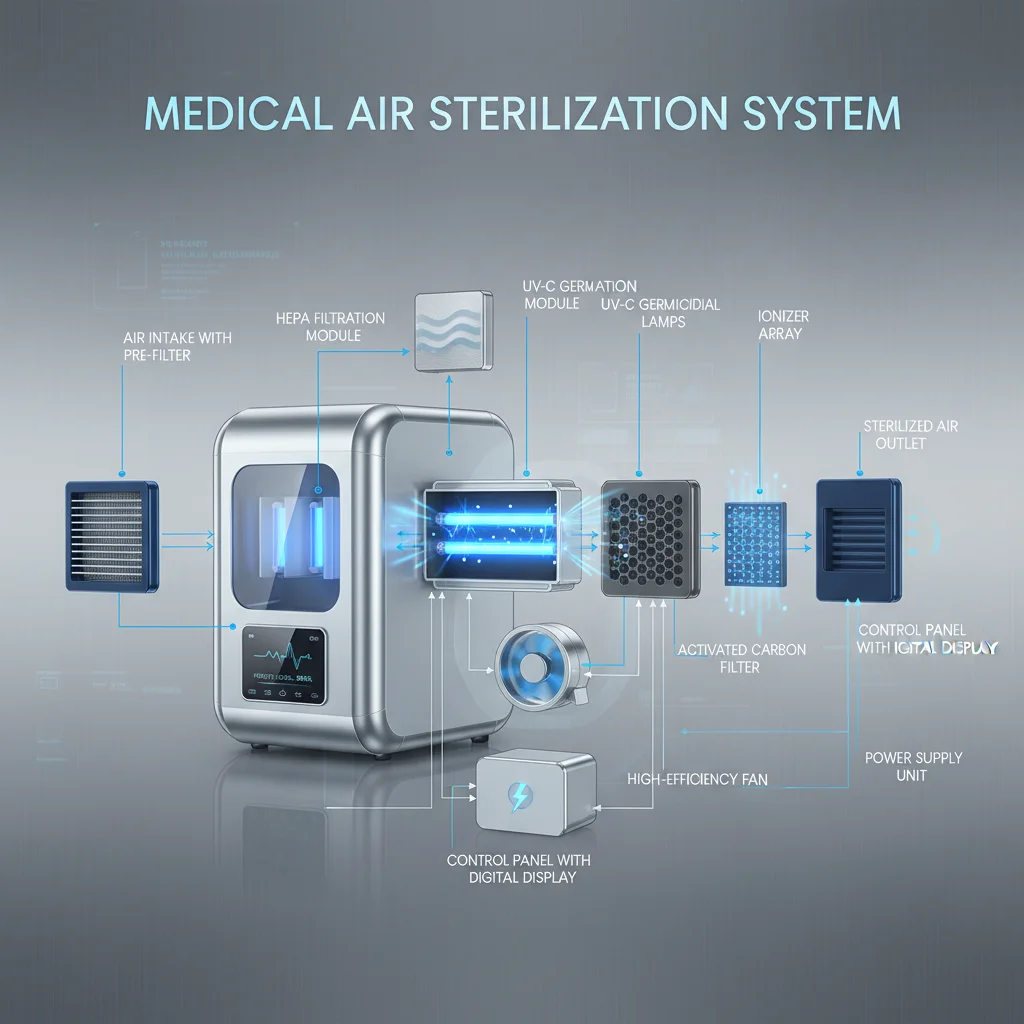
The effectiveness of a battery operated air filter depends on several critical components. First is the pre-filter, which captures larger dust particles and protects the more expensive secondary filters from premature saturation. This layer is crucial for extending the operational life of the battery, as a clogged filter forces the motor to work harder, thereby draining the power source faster.
The heart of the system is the HEPA H13 or H14 grade filter, which is capable of trapping 99.97% of particles as small as 0.3 microns. In a battery operated air filter, the filter media must be carefully selected to balance filtration efficiency with airflow resistance. Too high a resistance leads to excessive battery drain, while too low a resistance may compromise the sterile environment.
Finally, the integrated power management module and the activated carbon layer provide the finishing touch. The carbon filter absorbs odors and harmful gases (VOCs), while the power module provides real-time feedback on battery life and filter saturation levels. This synergy ensures that the user is always aware of the device's performance, preventing sudden failures in high-risk medical environments.
Performance Metrics and Energy Optimization
Optimizing the performance of a battery operated air filter involves a delicate balance between the Clean Air Delivery Rate (CADR) and the battery's Ampere-hour (Ah) capacity. Engineers focus on reducing "parasitic load"—energy lost through heat or friction—to ensure that every watt of power contributes directly to moving air through the filtration media. This optimization allows for a longer runtime, which is critical in emergency evacuations or long-term transport.
Moreover, the implementation of variable speed controllers allows the user to adjust the filtration intensity based on the current environmental risk. In a low-risk setting, a "silent mode" can extend battery life by several hours, whereas a "turbo mode" can be activated when high concentrations of airborne particulates are detected. This adaptive energy management is what separates professional medical-grade filters from consumer-grade portable purifiers.
Efficiency Ratings of Battery Operated Air Filter Technologies
Real-World Applications in Medical Environments
The practical application of a battery operated air filter is most evident in post-disaster relief operations. In scenarios where infrastructure is decimated, such as after earthquakes or floods, temporary clinics must be established rapidly. These portable filters allow medics to create "clean air bubbles" around triage areas, protecting both the patients and the healthcare workers from dust, mold, and other airborne pathogens.
In high-end medical facilities, these devices are often paired with a Space Aluminum Capsule Multi-Person Capsule or a Single Person Horizontal Oxygen Chamber. During the transition of a patient from a stationary chamber to a mobile unit, the battery-powered filter ensures that the air quality remains consistent, preventing any sudden exposure to non-sterile hospital air, which is critical for patients undergoing intensive hyperbaric or oxygen therapies.
Long-term Value and Sustainability in Air Purification
Investing in a battery operated air filter provides tangible long-term value by reducing the reliance on expensive, fixed-installation HVAC upgrades for every single room in a clinic. By deploying mobile, high-efficiency units, facilities can dynamically allocate air purification resources where they are most needed, reducing overall energy consumption and operational costs.
From a sustainability standpoint, the move toward rechargeable lithium-iron-phosphate (LiFePO4) batteries has significantly reduced the environmental footprint of these devices. These batteries offer longer life cycles—often lasting thousands of charge cycles—which means fewer batteries end up in landfills. This aligns with the global push toward "green hospitals" and sustainable medical device manufacturing.
Beyond the financial and ecological benefits, there is a profound emotional value: the trust and safety of the patient. Knowing that their breathing environment is protected by a fail-safe, battery-backed system provides peace of mind to patients who are already in a vulnerable state. This reliability fosters a stronger bond of trust between the patient and the healthcare provider.
Future Innovations in Battery-Powered Filtration
The future of the battery operated air filter lies in the integration of Artificial Intelligence (AI) and IoT connectivity. We are seeing the development of "smart sensors" that can detect specific viral loads or particulate spikes in real-time, automatically triggering the filter to increase its flow rate. This predictive filtration ensures that the battery is used only when necessary, maximizing efficiency and longevity.
Furthermore, the exploration of graphene-based filtration media promises to revolutionize the industry. Graphene filters can potentially offer higher permeability—meaning air passes through more easily—while maintaining superior filtration levels. This would drastically reduce the load on the battery, potentially doubling or tripling the operational time of portable units.
Finally, the integration of energy-harvesting technologies, such as small-scale solar panels or kinetic energy recovery, could lead to "self-charging" air filters. This would be a game-changer for NGOs operating in the most remote corners of the world, ensuring that life-saving air purification is available without any dependence on external power grids.
Comparative Analysis of Battery Operated Air Filter Technologies
| Filter Technology |
Energy Consumption |
Filtration Level |
Battery Runtime |
| Standard HEPA H13 |
Medium |
High (99.97%) |
8-12 Hours |
| ULPA Grade |
High |
Ultra-High (99.99%) |
5-8 Hours |
| Activated Carbon |
Low |
Gas/Odor Only |
15-20 Hours |
| Electrostatic-Hybrid |
Medium-Low |
High |
12-16 Hours |
| Graphene-Enhanced |
Very Low |
Ultra-High |
20+ Hours |
| Nano-Fiber Mesh |
Medium |
High |
10-14 Hours |
FAQS
Depending on the battery capacity and the filtration grade, most medical-grade units last between 8 to 16 hours on a medium setting. High-efficiency ULPA filters may drain the battery faster due to higher air resistance, while simple carbon filters can extend the runtime. Many modern units now feature swappable battery packs to allow for continuous 24/7 operation.
Yes, provided the device uses HEPA H13 or higher filtration. These filters are specifically designed to capture microscopic particles, including the droplets that carry viruses and bacteria. When used in a controlled space or near a patient's breathing zone, they significantly reduce the concentration of airborne pathogens, making them a vital tool for infection control.
Maintenance is similar, but with an added focus on battery health. While you must replace the filters based on the saturation indicator, you should also ensure the battery is stored at the correct temperature and charged periodically if not in use. Using a pre-filter is highly recommended to protect the main HEPA filter and prolong battery life by reducing motor strain.
Professional medical units are designed with acoustic dampening and brushless motors to keep noise levels low. Most devices offer multiple speed settings, including a "Silent" or "Sleep" mode, which is ideal for nighttime use or sensitive patient environments. The noise level is typically comparable to a quiet fan, ensuring patient comfort is not compromised.
Yes, provided they are certified medical devices. Manufacturers use flame-retardant plastics and enclosed battery compartments to prevent sparks. However, it is always essential to ensure the device is used according to the manufacturer's safety guidelines and kept away from direct oxygen leaks, as is standard with all electronic medical equipment.
Most advanced battery operated air filter units come with an integrated pressure sensor or a timer-based alert system. When the filter becomes saturated, airflow resistance increases, which the system detects as a drop in efficiency or an increase in power draw. A warning light or digital notification will then alert the user to change the filter.
Conclusion
The integration of the battery operated air filter into modern medical practice addresses a critical vulnerability in healthcare: the dependence on stationary power for air purity. By combining high-efficiency HEPA filtration with advanced battery management, these devices provide a portable, reliable, and scalable solution for maintaining sterile environments. From emergency disaster response to the refined needs of home-based oxygen therapy, the ability to ensure clean air on the move is no longer a luxury, but a clinical necessity.
Looking forward, as we embrace the era of smart healthcare and sustainable materials, these filtration systems will only become more efficient and autonomous. We encourage healthcare facilities and home-care providers to prioritize mobile air purification to enhance patient safety and operational flexibility. For more information on professional air purification and oxygen solutions, visit our website: www.storeoxygen.com