Hit enter to search or ESC to close
29 November 2025
Oxygen might seem like one of life’s simplest gifts—but when it comes to delivering it efficiently and safely across large facilities or entire regions, things get surprisingly complex. This is exactly where the centralised oxygen supply system steps in. In a nutshell, these systems ensure a consistent, regulated flow of medical or industrial oxygen from a single source to multiple endpoints, supplying hospitals, manufacturing plants, or emergency relief centers all at once.
Globally, especially with the recent challenges in healthcare and industrial growth, understanding and deploying centralised oxygen systems remains crucial. From preventing bottlenecks during medical crises to powering high-tech manufacturing lines, these systems save lives and streamline operations. This article dives deep into how and why these critical infrastructures are gaining momentum, along with what the future might hold.
Oxygen demand has surged in multiple sectors. According to the World Health Organization, over 20 million patients annually require supplemental oxygen in healthcare settings alone, and that number only skyrocketed during the COVID-19 pandemic.
But it's not just hospitals. Industrial oxygen fuels chemical production, welding, steel manufacturing, and even wastewater treatment worldwide. Ill-equipped or fragmented oxygen supply can cause operational hiccups or worse — jeopardize patient care.
However, fragmented oxygen provision faces many hurdles — logistical delays, inconsistent supply pressure, contamination risks, and high costs. Centralised oxygen supply systems address these by unifying delivery, reducing dependency on individual tanks or small-scale PSA units (pressure swing adsorption), and allowing for scalable, safer oxygen access.
Put simply, a centralised oxygen supply system is a large-scale setup that generates or stores oxygen in a central location and distributes it via pipeline networks to various endpoints. This might mean a hospital complex, a remote mining camp, or an entire industrial park. Instead of each user relying on separate oxygen cylinders or small onsite generators, everything comes from a carefully controlled central source.
In medical terms, this means uninterrupted, high-purity oxygen directly reaching patient care areas, oxygen tents, or surgical suites. For industry, it’s about consistent oxygen feed for large furnaces, chemical reactors, or environmental controls.
This approach not only improves reliability but also cuts down oxygen waste, simplifies safety monitoring, and boosts cost efficiencies.
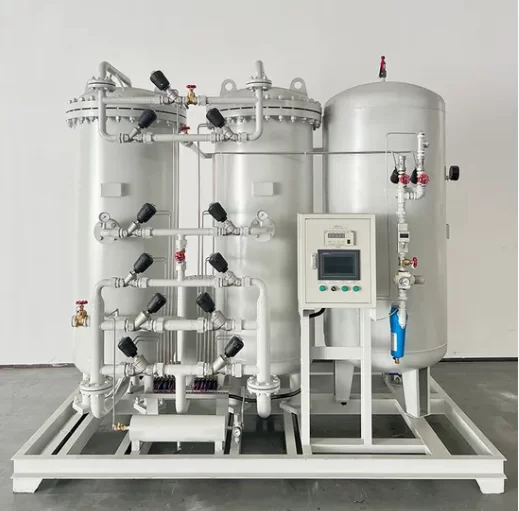
This is the heart of the system — oxygen either created onsite by PSA generators or delivered as liquid oxygen (LOX) in tanks. Each method has pros and cons: PSA is self-sufficient but limited in scale, LOX can handle massive demand but needs reliable delivery logistics.
The arteries carrying oxygen from the central unit to endpoints. These pipelines must be leak-proof, corrosion-resistant, and designed for appropriate pressure ratings depending on user needs.
Ensuring safety by maintaining steady pressure and alerting operators to leaks, pressure drops, or other abnormalities. Many facilities now integrate digital monitoring for real-time insights.
The interface where users access oxygen — from hospital wall outlets to industrial nozzles. Design focuses on ease of access, safe usage, and contamination prevention.
Modern installations use automated controls, with PLCs (Programmable Logic Controllers) or SCADA systems for remote monitoring, fault detection, and preventive maintenance scheduling.
Mini takeaway: It’s the synergy of solid generation/storage, smart distribution, and vigilant control that keeps centralised oxygen systems humming smoothly.
We often think of oxygen supply only in hospitals, but its applications and critical role are practically everywhere.
Mini takeaway: Centralised oxygen underscores not only quality of care but also operational efficiency in sectors as diverse as healthcare, mining, and disaster management.
It’s not just fancy engineering — the benefits impact real-world cost, care, and sustainability goals.
Frankly, when oxygen levels mean the difference between life and death, these systems don’t just save money—they build peace of mind.
Technology never stands still, and oxygen supply systems are no exception.
It’s quite exciting—oxygen systems are morphing from passive pipelines into dynamic, smart infrastructures.
Of course, no system is perfect. The major hurdles include:
Many experts recommend hybrid models combining central plants with localized backup cylinders or mini-generators. Remote monitoring tools increasingly make maintenance manageable without constant onsite presence.
| Feature | Specification | Notes |
|---|---|---|
| Oxygen Purity | ≥ 93% (PSA), 99.5% (LOX) | Meets medical grade standards per ISO 7396-1 |
| Delivery Pressure | 4.5 barg to 7 barg | Configurable per user needs |
| Storage Capacity | Liquid tanks: 5000L to 20,000L | Variable by facility size |
| Pipeline Material | 316L Stainless Steel or Nylon | Corrosion-resistant, oxygen-compatible |
| Control System | PLC with SCADA interface | Remote real-time monitoring |
| Vendor | Key Strengths | Pricing | Support & Service |
|---|---|---|---|
| OxyGlobal Systems | Custom modular systems, green tech integration | Mid to high range | 24/7 remote monitoring & training |
| MedOxygen Corp | Strong worldwide logistics, liquid oxygen expertise | High range | Onsite installation & maintenance |
| GreenAir Solutions | Affordable PSA units, solar-compatible | Low to mid range | Remote diagnostics with limited onsite support |
Installation times vary depending on hospital size and complexity but generally range from 4 weeks to 3 months. Site assessments, pipeline design, oxygen source setup, and testing all take careful planning. Fast track options exist but require more investment and coordination.
Yes, especially in mid-to-large facilities. Centralised systems reduce frequent cylinder refilling and transport costs. While the upfront capital investment is higher, the lifecycle costs usually break even within 2–5 years, depending on usage.
Onsite PSA generators need stable electricity to function. In off-grid locations, hybrid setups coupling oxygen tanks, solar power, or backup generators are common. Mobile or containerised systems with integrated power solutions are emerging for such challenges.
Standards include ISO 7396-1 for medical gas pipeline systems and NFPA 99 for health care facilities. These cover aspects from pipeline construction, purity levels, to emergency shutoffs, aiming to minimize fire risk and ensure delivery reliability.
Start by consulting with specialized vendors who offer site evaluation and customized solutions. Visit trusted portals like centralised oxygen supply system suppliers for detailed product catalogs and support.
In both critical healthcare and complex industrial operations, centralised oxygen supply systems make an enormous difference — offering safer, more predictable, and sustainable oxygen delivery. They minimize risk, trim cost overruns, and future-proof essential services, especially in a world that increasingly demands resilience and efficiency.
Whether you’re managing a hospital network, running a remote industrial site, or coordinating disaster response, investing in the right oxygen infrastructure pays dividends. To explore options and expert advice tailored to your needs, be sure to visit our centralised oxygen supply system resource. Trust me – it’s worth a look.
References:
1. World Health Organization
2. ISO 7396-1 Medical gas systems
3. National Fire Protection Association (NFPA 99)