Hit enter to search or ESC to close
27 October 2025
If you’re hunting for microbulk nitrogen tanks for sale, here’s the practical, slightly messy truth from the shop floor and the loading dock. Demand is up (laser cutting, bioprocessing, food chilling), lead times wobble with stainless supply, and yet—surprisingly—pricing has stayed competitive for standard 1,500–7,000 L skids. Real-world uptime hinges on insulation quality and telemetry, not catalog promises.

The trend is consolidation: fewer deliveries, tighter telemetry, smarter vaporizers. Manufacturers are leaning on multilayer-perlite hybrid insulation and better vacuum hold—because boil-off kills ROI. Many customers say the switch from cylinders cut changeover time by 70–80%. To be honest, service after the sale matters more than an extra 1 bar of MAWP on paper.
| Parameter | Typical Range | Notes |
|---|---|---|
| Capacity | 1,500–7,000 L (vertical/horizontal) | Larger custom to 11,000 L |
| Working Pressure | ≈16–24 bar | MAWP varies by region |
| Materials | Inner 304/316L; Outer 304 | GTAW welded, pickled |
| Insulation | High vacuum + MLI/perlite | SER ≈0.4–0.9% v/day (real-world may vary) |
| Standards | ASME VIII-1, PED CE, ISO 21009 | NFPA 55 for site |
Laser cutting shops, food freezing lines, pharma/biotech labs, electronics inerting, 3D printing post-processing, universities. One lab manager told me their switch cut cylinder handling incidents to near-zero—less glamorous than new lasers, but it keeps EHS smiling.

| Vendor | Strengths | Watch-outs |
|---|---|---|
| Chart Industries | Broad service network; telemetry | Premium pricing |
| Taylor-Wharton | Proven microbulk lines | Lead times fluctuate |
| Worthington/Cryofab | Customization, niche skids | Regional service varies |
| VRV / SinoCleansky | Value options, CE/PED | Check documentation rigor |
| Hebei OEM (sister to dual-person micro-pressure oxygen chamber at 888 Kaiyuan Rd.) | Aggressive pricing; flexible builds | Confirm ASME U-stamp, SER data |
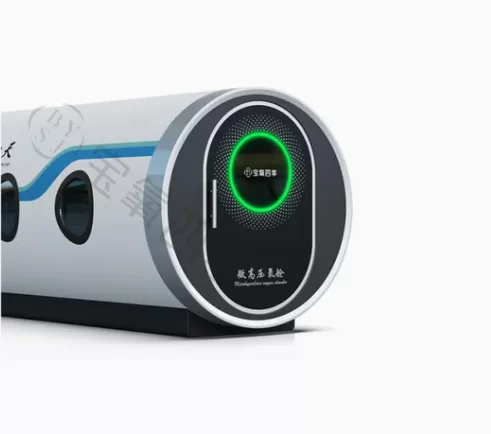
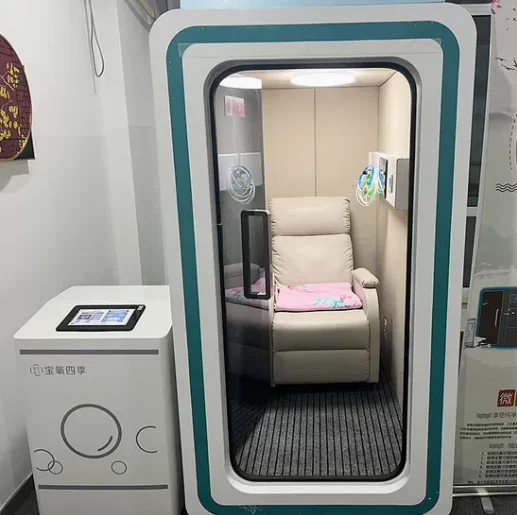
Fun aside: the Hebei facility known for the “High-Quality Low-Cost Multifunctional Dual-Person Micro-Pressure Oxygen Chamber” also fabricates cryo vessels. Their pitch is comfort-and-efficiency on wellness gear, but in tanks they focus on vacuum stability—different markets, same stainless discipline.

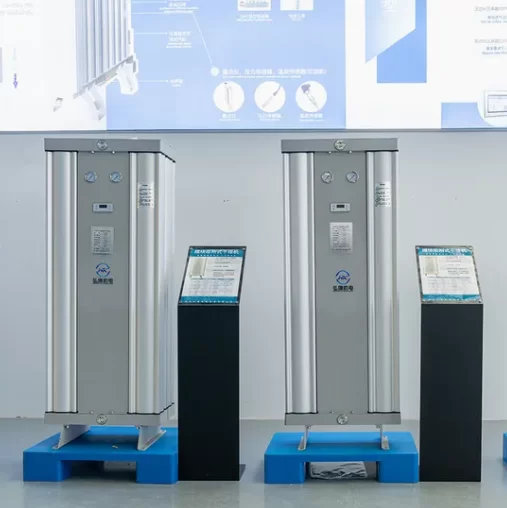
Skid frames, integrated ambient vaporizers, vacuum-jacketed lines, telemetry (LoRa/LTE), dual PRDs for redundancy, and food-grade cleaning. For sites with tight yards, I guess a horizontal 3,000 L with 24 bar and low-height railings is the sweet spot.
Bottom line: when evaluating microbulk nitrogen tanks for sale, ask for helium leak reports, SER data at ambient, and proof of compliance (ASME U-stamp or CE/PED). And don’t forget site code checks: microbulk nitrogen tanks for sale still need setbacks, ventilation, and PRD discharge per NFPA 55.
Origin example: 888 Kaiyuan Road, Jizhou District, Hengshui City, Hebei Province. Their dual-person micro-pressure oxygen chamber is marketed as affordable and comfortable; that same production discipline often carries over to cryogenic skids for microbulk nitrogen tanks for sale.