Hit enter to search or ESC to close
Maintaining sterile environments in healthcare and industrial settings has evolved from a supplementary safety measure to a core operational requirement. The shift toward higher automation in air purification is driven by the need to eliminate human error and ensure consistent pathogen reduction in critical zones.
Modern facility managers are increasingly moving away from manual chemical disinfection, opting instead for integrated mechanical systems that provide continuous air scrubbing. This transition is particularly evident in surgical theaters and cleanrooms where airborne contaminants can jeopardize patient outcomes or product purity.
When evaluating an air disinfection machine factory, it is essential to analyze the synergy between airflow dynamics, filtration media, and sterilization technology to ensure a holistic approach to environmental safety.


Historically, air disinfection relied on periodic interventions, such as UV-C lamp exposure or chemical fogging, which required the evacuation of the room. While effective, these methods created operational downtime and lacked the ability to handle "active" contamination occurring during occupancy.
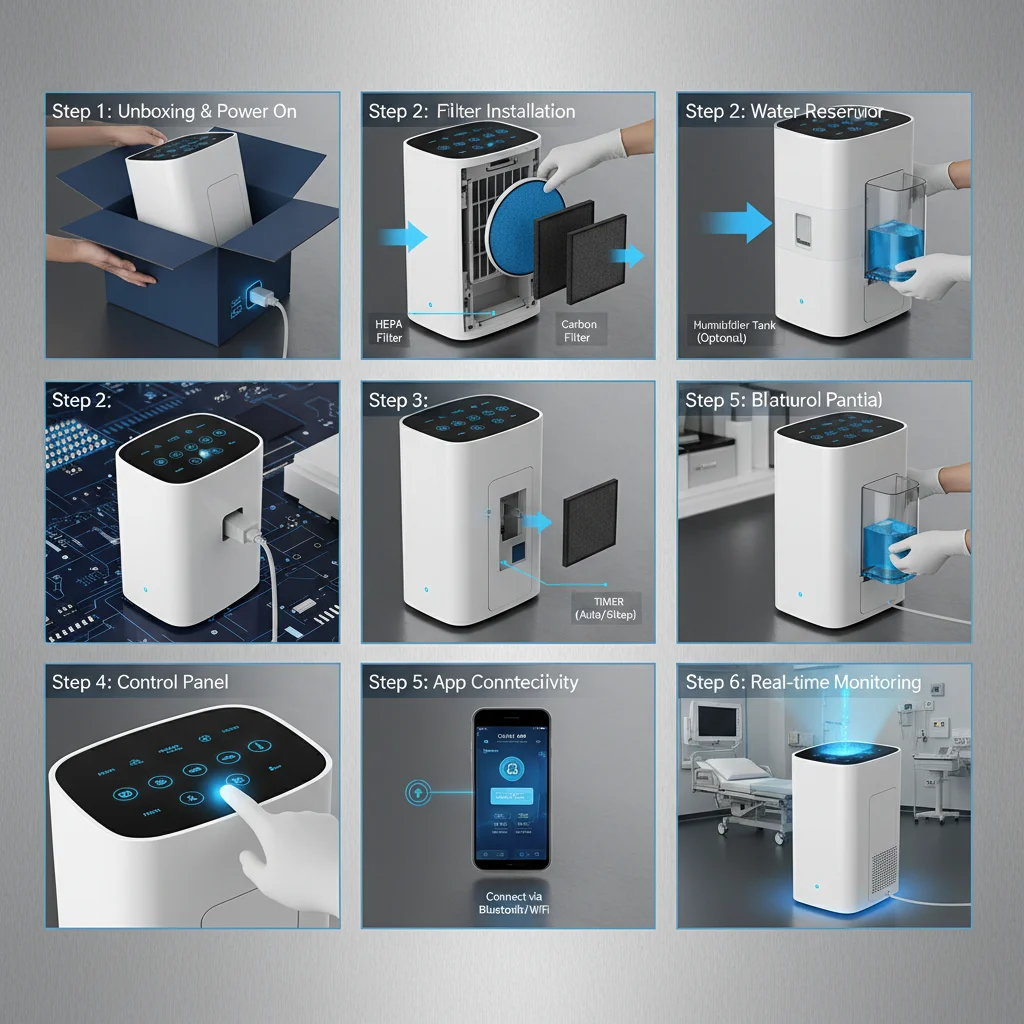
The modern approach prioritizes continuous-flow systems. By integrating high-efficiency particulate air (HEPA) filtration with active sterilization agents, an air disinfection machine factory now produces units that scrub the air in real-time, maintaining a constant baseline of sterility without disrupting workflows.
A professional air disinfection system is composed of several critical stages. The first stage involves pre-filtration to remove large dust particles, protecting the more sensitive downstream components. Following this, a primary filtration stage—often utilizing HEPA or ULPA filters—captures 99.97% or more of particles as small as 0.3 microns, including most bacteria and viral carriers.
The sterilization core typically employs one or a combination of technologies: UVC radiation, photocatalytic oxidation (PCO), or plasma-based ionization. For example, units like the SJJH-Y-300 Air Disinfection Machine leverage specific airflow paths to ensure that every cubic centimeter of air is exposed to the sterilization source for a sufficient duration to deactivate biological agents.
Finally, the system is managed by a control unit that monitors sensor data, such as particle counts and airflow velocity. This ensures that the motor speed adjusts dynamically to maintain the required air exchange rate per hour (ACH), which is a fundamental metric for compliance with international medical standards.
Measuring the success of an air disinfection system requires more than just checking the filter grade. The "Clean Air Delivery Rate" (CADR) must be balanced with the specific volume of the room and the projected biological load. A machine that is too small will fail to cycle the air fast enough to prevent pathogen accumulation.
System efficacy is a function of the interaction between the air exchange rate (ACH), the sterilization kill-rate of the active technology, and the physical distribution of airflow to avoid "dead zones" where contaminants can linger.
Safety is equally paramount, particularly when using UVC or ozone-generating technologies. Engineering safeguards must ensure that harmful radiation or gas does not leak into the occupied space. This is why industrial-grade units utilize enclosed reaction chambers and interlock switches that deactivate the system if the housing is opened.
The requirements for air disinfection vary drastically depending on the application. A hospital ward requires a balance between pathogen removal and noise levels to ensure patient comfort, whereas a laboratory focuses on absolute particle counts to prevent cross-contamination of samples.
Comparing these environments reveals that "Recovery Time"—the time it takes for a room to return to its baseline sterility after a contamination event—is the most critical performance indicator for high-risk areas.
Integrating a standalone disinfection unit into an existing HVAC system often presents challenges related to static pressure. If a machine's internal resistance is too high, it can reduce the overall airflow of the room, leading to stagnant air pockets. Procurement teams must ensure that the unit's fan capacity compensates for the pressure drop across high-efficiency filters.
In a typical industrial setting, such as a pharmaceutical packaging area, the goal is to prevent "shedding" from personnel. Here, a mobile air purifier or a fixed medical air purifier is strategically placed near the source of contamination to capture particles before they can migrate across the room.
The industry is moving toward "intelligent disinfection," where systems are no longer static but responsive. Integrating real-time bio-sensors that can detect specific viral markers or bacterial concentrations will allow machines to ramp up their intensity only when needed, significantly reducing energy consumption and extending the lifespan of UV lamps.
Another emerging trend is the use of nano-coated filters. By applying antimicrobial coatings directly to the filter media, manufacturers can prevent the "bio-accumulation" of captured pathogens, reducing the risk of secondary contamination during filter replacement and decreasing the frequency of maintenance cycles.
As we see a broader adoption of modular oxygen generation and purification engineering, the integration of air disinfection into a comprehensive "Medical Center Gas and Air Supply System" will become the standard. This allows for a centralized control point to manage both the air we breathe and the therapeutic gases delivered to patients.
Selecting the right equipment requires a structured comparison of technical capabilities against the specific constraints of the facility. A common error is prioritizing the filter grade while ignoring the air change rate, resulting in a sterile filter but an unsterilized room.
Managers should evaluate the total cost of ownership (TCO), which includes the initial purchase price, the cost of replacement filters, and the energy consumption over a five-year period. Modular systems often provide better long-term value as they can be scaled without replacing the entire infrastructure.
The following framework provides a relative assessment of different disinfection approaches based on typical facility requirements.
| Factor | HEPA Only | HEPA + UVC | Plasma / PCO | Centralized HVAC |
|---|---|---|---|---|
| Pathogen Kill Rate | Low (Capture Only) | High | Medium-High | Variable |
| Energy Demand | Low | Medium | Medium | High |
| Maintenance Cycle | Frequent | Annual (Lamp) | Moderate | Complex |
| Operational Noise | Low-Medium | Low-Medium | Low | High (Ducts) |
| Installation Speed | Instant | Instant | Instant | Slow (Project) |
| Primary Use Case | Dust Control | Clinical Sterility | Odors/VOCs | Entire Facility |
Medical-grade units are engineered for higher air exchange rates (ACH) and typically utilize medical-grade HEPA filters combined with active sterilization technologies like UVC or plasma. Unlike consumer units, they are designed for 24/7 continuous operation in harsh environments and must meet strict certification standards regarding ozone emission and radiation leakage to ensure patient and staff safety.
Filter replacement frequency depends on the environment's dust load, but pre-filters are usually changed every 1-3 months, while HEPA filters may last 6-12 months. UV-C lamps lose their germicidal intensity over time even if they still emit light; therefore, they are typically replaced every 8,000 to 9,000 operational hours to maintain the required kill-rate.
No. Air disinfection machines target airborne pathogens (aerosols), whereas chemical cleaning targets surface-borne contaminants (fomites). A comprehensive infection control strategy must combine both: air disinfection for continuous airborne risk mitigation and surface disinfection for high-touch areas. They are complementary, not mutually exclusive, tools in a sterile environment.
The most common error is choosing a machine based on "maximum CADR" without calculating the actual Air Changes per Hour (ACH) needed for the specific room volume. For a high-risk clinical area, a target of 6 to 12 ACH is often required. If the machine's airflow is insufficient for the room's cubic footage, the air will not be scrubbed fast enough to maintain sterility.
The primary risk is the potential production of ozone as a byproduct, which can be a respiratory irritant in high concentrations. Professional units from a reputable factory include ozone-decomposition catalysts or strict power controls to ensure that ozone levels remain well below the safety thresholds set by organizations like the WHO or OSHA.
Modular design allows facilities to scale their air purification capacity as their needs grow without needing to replace entire systems. It simplifies maintenance by allowing a single module to be serviced or replaced while the rest of the system continues to operate, ensuring that the room never loses its sterile status during routine upkeep.
The engineering of air disinfection is no longer just about filtration; it is about creating a dynamic, responsive environment that proactively manages biological risks. By combining high-efficiency particulate capture with targeted sterilization, facilities can significantly reduce the incidence of healthcare-associated infections and industrial contamination.
Ultimately, the success of these systems depends on the precision of the initial selection process—matching the technical output of the equipment to the physical and biological demands of the space. As technology trends toward AI-driven monitoring and nano-material filtration, the ability to maintain a sterile atmosphere will become more efficient, sustainable, and invisible to the end-user.