Hit enter to search or ESC to close
Establishing a reliable medical gas infrastructure is a critical operational priority for modern healthcare facilities. For hospital administrators and project engineers, the challenge lies in transitioning from costly cylinder dependency to a sustainable, on-site generation model. A professional medical center oxygen supply system integrates advanced pressure-swing adsorption (PSA) technology to ensure a continuous flow of high-purity oxygen, vacuum suction, and compressed air directly to the bedside.
By implementing a centralized gas station, clinics and hospitals can significantly reduce procurement risks and logistical overheads. These systems are engineered to serve high-demand areas including operating rooms, intensive care units (ICU), and emergency wards. Understanding the technical synergy between gas generation, pipeline distribution, and terminal delivery is essential for ensuring patient safety and operational efficiency in any clinical setting.

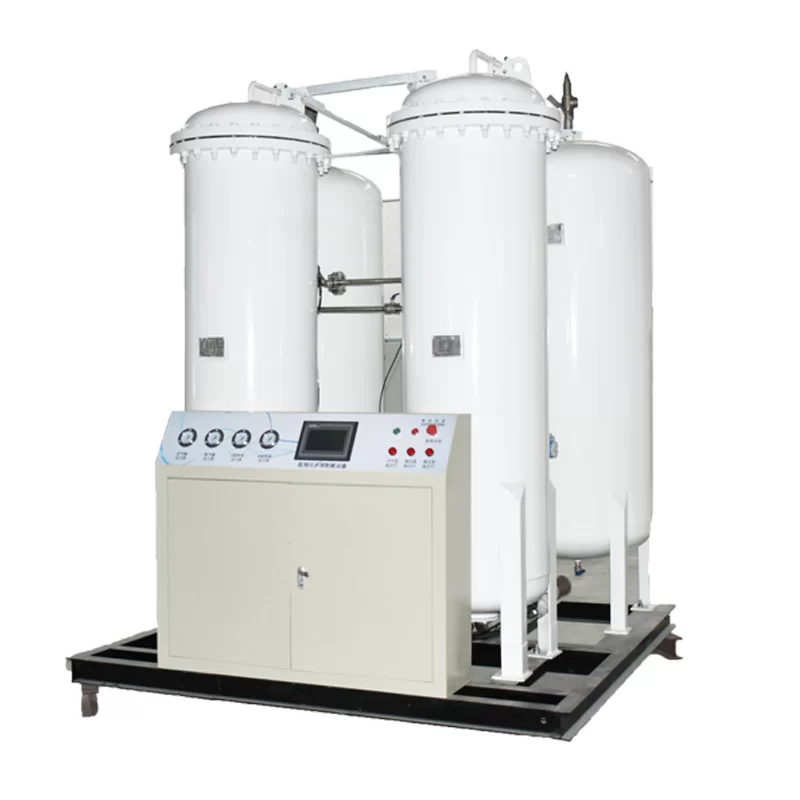
A comprehensive medical gas system is far more than a simple generator; it is a complex network designed for zero-failure performance. The architecture begins at the central gas supply station, where medical molecular sieve oxygen generation equipment produces oxygen with a purity typically ranging between 93.5% and 94.5%. This station serves as the heart of the facility, coordinating the production of oxygen, vacuum suction, compressed air, and other specialty gases like nitrogen or carbon dioxide.
From the central hub, gas is transported through a specialized network of medical-grade pipelines. To maintain safety and consistency, the system incorporates several critical components:
This structured approach ensures that life-critical gases are available instantaneously, reducing the time spent by nursing staff on cylinder replacements and focusing their attention on patient care.

When selecting on-site oxygen production equipment, technical specifications must align with strict international healthcare standards. The core of the system relies on the stability of the molecular sieve and the efficiency of the compression cycle. For large-scale hospital applications, the capacity must be calculated based on peak-load scenarios—such as during respiratory pandemics or high surgical volumes—rather than average daily use.
Material integrity is non-negotiable. All components, from the valves to the pipeline fittings, must resist corrosion and contamination. Compliance with certifications such as ISO 13485 and CE ensures that the manufacturing process adheres to medical device quality management systems. Furthermore, the operational noise level must be kept low to avoid disturbing patients in nearby wards, requiring advanced acoustic insulation in the plant room.
Another critical factor is the power configuration. Most professional systems are designed for standard 220V inputs but require stable electrical environments to prevent unplanned shutdowns. The integration of backup manifolds ensures that if the primary generator requires maintenance, the hospital maintains a secondary reserve of oxygen, eliminating any risk of gas depletion during critical procedures.
The deployment of a medical gas plant varies significantly depending on the facility type. In large general hospitals, the focus is on high-volume throughput and complex piping networks that span multiple floors. In contrast, nursing homes and specialized rehabilitation centers often require more compact, modular systems that prioritize ease of maintenance and lower operational costs.
Site installation is a precision-driven process. A professional setup requires:
Customization is often necessary to meet the specific needs of different departments. For example, a surgical suite requires higher vacuum suction capabilities than a general recovery ward. By tailoring the output of the compressed oxygen production system, facilities can optimize energy consumption while meeting the diverse clinical demands of their patient population.
| Parameter | Standard Range | Impact on Facility | Requirement Level |
|---|---|---|---|
| Oxygen Purity | 93.5% - 94.5% | Clinical efficacy and patient safety | Critical |
| Noise Level | Low / Insulated | Patient recovery environment | High |
| Voltage Input | 220V Standard | Operational stability | Standard |
| Installation | On-site / Modular | Deployment speed and space use | Application-dependent |
| Certifications | ISO/CE/FDA | Regulatory compliance & safety | Mandatory |
The reliability of a medical gas system is only as strong as the manufacturer's quality control. A reputable partner integrates comprehensive R&D with rigorous testing phases. This includes tensile strength tests for pipelines, purity verification for the molecular sieve, and leak-detection protocols for the entire distribution network. The use of antibacterial and hypoallergenic materials in the terminal components further enhances the sterile environment of the hospital.
Beyond the hardware, the value of a supplier is found in their engineering support. From the initial design phase—where gas flow calculations are performed—to the final on-site commissioning, a professional manufacturer provides a turnkey solution. This includes the provision of detailed documentation for traceability and recall control, ensuring that every batch of components is tracked and verified.
After-sales support is equally vital. Given the life-critical nature of oxygen supply, responsive service networks and the availability of genuine spare parts are essential. A manufacturer that offers five-star after-sales service and adheres to ISO 9001 standards provides the peace of mind necessary for hospital directors to ensure uninterrupted clinical operations.
The healthcare industry is moving toward "Smart Hospitals," and medical gas systems are evolving accordingly. We are seeing an increase in the integration of IoT-enabled monitoring, where gas levels, pressure, and purity are tracked via digital dashboards in real-time. This allows for predictive maintenance, where the system can alert engineers to a potential component failure before it impacts patient care.
Sustainability is also driving innovation. There is a growing demand for energy-efficient compressors and recyclable materials in the construction of gas plants. As global healthcare investment increases, especially in emerging markets, the trend is shifting toward modular, scalable plants that can grow alongside the hospital's capacity without requiring a complete system overhaul.
Furthermore, the convergence of oxygen generation with other medical engineering projects—such as cleanroom construction and radiation protection—allows for a more holistic approach to hospital design. By integrating gas supply into the broader architectural plan, facilities can achieve higher efficiency, lower operational costs, and improved patient outcomes.
Most professional medical PSA (Pressure Swing Adsorption) systems produce oxygen with a purity between 93.5% and 94.5%, which is the standard required for most clinical applications.
Yes, these systems are designed for both new constructions and retrofitting. They can be installed on-site, though the pipeline routing must be carefully planned to minimize disruption to hospital operations.
A centralized system generates oxygen on-site and delivers it via pipelines directly to the patient. This eliminates the need for frequent cylinder transport, reduces the risk of supply chain disruptions, and lowers long-term operational costs.
Look for manufacturers with ISO 13485 (Medical Devices), ISO 9001 (Quality Management), and CE certifications, as these ensure the products meet international safety and performance standards.
Professional installations include backup manifold systems and alarm devices. If the primary generator fails, the system automatically switches to a reserve supply, ensuring an uninterrupted flow of oxygen to the patients.
Yes, systems are highly customizable in terms of production capacity, pipeline layout, and terminal configurations to suit everything from small clinics to large-scale medical centers.
Ensuring a stable and safe oxygen supply is the foundation of critical care. By partnering with experienced oxygen gas plant manufacturers, healthcare facilities can invest in a future-proof infrastructure that prioritizes patient safety and operational excellence.