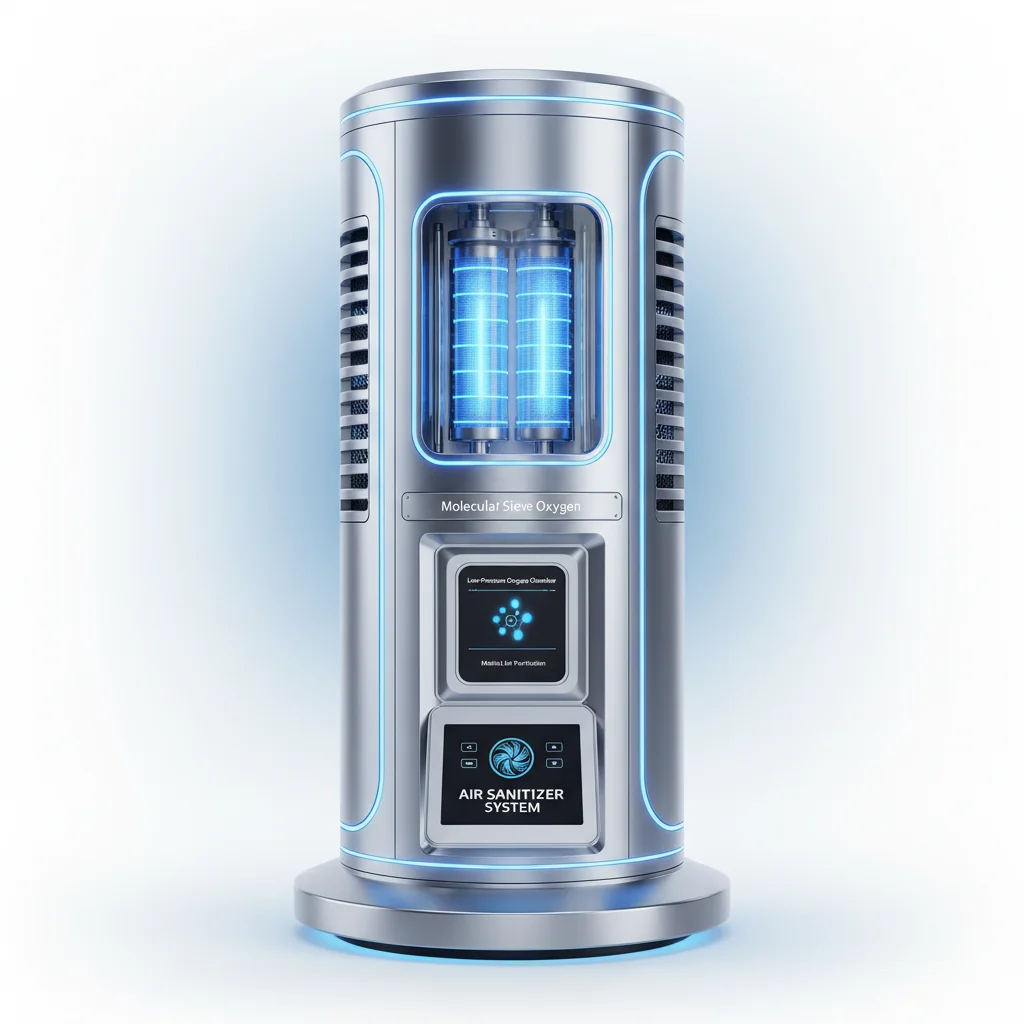
Selecting the right partner among various oxygen generation plant manufacturers is a critical decision for healthcare facilities and industrial plants aiming to eliminate the logistical risks of cylinder dependency. The shift toward on-site generation represents a strategic move toward operational autonomy and cost stability.
Modern on-site plants utilize Pressure Swing Adsorption (PSA) technology to extract high-purity oxygen directly from the ambient air, ensuring a continuous supply that meets stringent medical and industrial standards. However, the effectiveness of these systems depends heavily on the engineering precision of the manufacturer.
This guide examines the technical benchmarks, procurement criteria, and operational considerations necessary to evaluate manufacturers, ensuring that the chosen infrastructure supports long-term clinical safety and economic efficiency.

Evaluating Technical Standards for On-Site Oxygen Plants

The primary objective of an on-site oxygen plant is to provide a reliable, high-purity gas stream without the volatility of external supply chains. Technical standards usually revolve around the purity of the output—typically ranging from 93% to 99.5%—and the stability of the flow rate under varying load conditions.
For medical environments, these plants must integrate seamlessly with Medical Center Oxygen Supply Systems, requiring rigorous certification such as ISO 13485. The engineering focus is on the zeolite molecular sieve's adsorption efficiency and the precision of the PLC-based control systems that manage the pressure cycles.
Manufacturers who prioritize modular design allow for easier scalability. By utilizing components like modular suction dryers and integrated air purifiers, these systems can be adapted to the specific environmental conditions of the installation site, such as humidity and ambient temperature, which directly affect gas yield.
Core Performance Indicators in PSA Technology
Pressure Swing Adsorption (PSA) is the industry standard for medium-to-large scale oxygen generation. It works by utilizing the different adsorption properties of nitrogen and oxygen on a molecular sieve under pressure, allowing the system to "scrub" nitrogen from the air.
Key indicators include the energy consumption per cubic meter of oxygen produced and the dew point of the compressed air. A lower dew point, achieved through high-quality drying systems, prevents the contamination of the molecular sieve, thereby extending the service life of the towers.
Furthermore, the transition between the 2-tower and 3-tower configurations offers a trade-off between cost and continuity. While a 2-tower system is more compact, a 3-tower design often provides a more consistent flow and reduces the mechanical stress on the valves during the switching process.
Diverse Application Scenarios for Industrial and Medical Oxygen
Oxygen generation plants serve a spectrum of needs, from high-volume hospital central supply to specialized therapeutic applications. In clinical settings, these plants feed the central pipeline systems that supply operating theaters, ICUs, and patient wards, ensuring that life-critical oxygen is always available.
Beyond general medical use, there is a growing demand for integration with hyperbaric oxygen therapy (HBOT). Systems must be capable of supplying high-pressure oxygen to various chambers, including multi-person capsule-circles or single-person horizontal chambers, where precision in pressure and purity is non-negotiable for patient safety.
In industrial contexts, such as metallurgy or chemical processing, the focus shifts toward high-flow capacities and durability in harsh environments. These plants are designed to handle continuous 24/7 operation with minimal downtime, often incorporating redundant compressors to ensure zero interruption in the production line.
Comparative Analysis of System Efficiency Metrics
Evaluating the efficiency of an oxygen plant requires looking at the ratio of energy input to gas output. Conventional cylinder-based delivery involves significant energy loss during transport and handling, whereas on-site plants consolidate these costs into electrical power for compression.
When comparing standard industrial benchmarks with optimized PSA systems, the reduction in operational costs becomes evident over a 5-year lifecycle. Optimized systems typically show better performance in purity retention and a lower frequency of molecular sieve replacement.
oxygen generation plant manufacturers Performance Metrics
The data suggests that while the initial capital expenditure for an on-site plant is higher, the operational stability and purity consistency provide a superior return on investment, especially for facilities with a daily oxygen consumption exceeding 50 cubic meters.
Critical Procurement Factors for Hospital Infrastructure
Procuring an oxygen plant for a medical facility is not merely a purchase of equipment but an investment in life-support infrastructure. The first consideration must be the "fail-safe" mechanism—how the system behaves during a power outage or a compressor failure.
Buyers should evaluate the manufacturer's ability to provide a complete "turnkey" solution, including purification engineering and the installation of medical air purifiers. The integration of an automatic interlocking venting device is essential to ensure that only gas meeting the required purity enters the hospital's main pipeline.
Additionally, the availability of remote monitoring and rapid technical support is paramount. Since medical oxygen is critical, the ability of the manufacturer to provide real-time diagnostics via a PLC touch-screen interface reduces the risk of unexpected downtime.
Future Trends in Automated Oxygen Generation Systems
The trajectory of oxygen generation is moving toward higher levels of automation and energy optimization. We are likely to see a broader adoption of "Smart Plants" that use AI to adjust cycle times based on real-time demand, significantly reducing electrical waste during low-usage periods.
Material science is also evolving, with new generations of zeolite molecular sieves that offer higher adsorption capacities and better resistance to moisture. This could lead to more compact plant designs without sacrificing flow rates, making them more viable for smaller clinics or mobile medical units.
Furthermore, there is an expected trend toward the integration of carbon-neutral power sources. As manufacturers optimize the energy footprint of PSA systems, the shift toward solar-integrated oxygen plants may become a reality for remote healthcare centers in developing regions.
Selecting the Optimal Generation Solution by Scale
Choosing the right system depends on the intersection of required flow rate, purity needs, and available floor space. A small clinic has vastly different requirements than a regional hospital or a chemical plant.
The following matrix provides a decision-making framework based on typical operational requirements and the technical approach suggested for each scale of operation.
| Facility Scale | Primary Tech Approach | Critical Requirement | Maintenance Focus |
|---|---|---|---|
| Small Clinic | Small Oxygen Concentrator | Compact Footprint | Filter Replacement |
| Medium Hospital | 2-Tower PSA Plant | Purity Stability | Sieve Health |
| Regional Center | 3-Tower PSA Plant | Uninterrupted Flow | Compressor Service |
| Industrial Plant | High-Capacity Modular | Maximum Throughput | Valve Durability |
| Specialized Lab | 99.5% High Purity Plant | Ultra-Low Impurity | Air Purification |
| Remote Site | Modular Containerized | Ease of Deployment | Power Stability |
Ultimately, the selection process should prioritize the long-term reliability of the manufacturer. Readers evaluating these systems can review the relevant product and company information available through www.storeoxygen.com to match their specific capacity needs with the right technical configuration.
Frequently Asked Questions
Conclusion
The transition to on-site oxygen generation is a strategic imperative for modern healthcare and industrial facilities. By reducing reliance on external suppliers and utilizing advanced PSA technology, organizations can ensure a more stable, cost-effective, and secure gas supply.
Success in implementation depends on a rigorous evaluation of technical benchmarks, from energy efficiency to purity stability. When selecting among oxygen generation plant manufacturers, the priority should always remain on the balance between initial investment and long-term operational reliability.